DEEP RoboticsChina2023
Jueying Lite3
- In production
- Under 20 kg
- Research and development
- Consumer and education
VariantsBasicVentureProLIDAR
The manufacturer sells this model in several variants. The figures on this page apply to the variant the source names.
Key figures as stated by the manufacturer
3 of 6 stated · 3 gaps- Weight 12kg26.5lbOur conversion from 12 kg. The manufacturer does not state an imperial figure itself, so the conversion has no source of its own.A
- Payload, walking 5kg11lbOur conversion from 5 kg. The manufacturer does not state an imperial figure itself, so the conversion has no source of its own.B
- Runtime 90–120minWarning: load condition not statedA
- Max speed not stated
- IP rating not stated
- Indicative price not stated
Deviations and variants in the key figures (3)
Weight
CaveatIncludes battery. The value is the Basic variant's.
- Variants
- Basic
- 12
- LIDAR
- 13.5
- Pro
- 12.9
- Venture
- 12.2
Payload, walking
CaveatThe Chinese label is CONTINUOUS walking load; the English one just says Walking Load. The value is the Basic variant's.
- Variants
- Basic
- 5
- LIDAR
- 2.5
- Pro
- 4
- Venture
- 4.5
Runtime
CaveatNo load condition given. Range falls as equipment is added; the schema has no range field.
- Variants
- Basic
- 1.5-2 h, 5 km
- LIDAR
- 1.5-2 h, 2.7 km
- Pro
- 1.5-2 h, 3.4 km
- Venture
- 1.5-2 h, 4 km
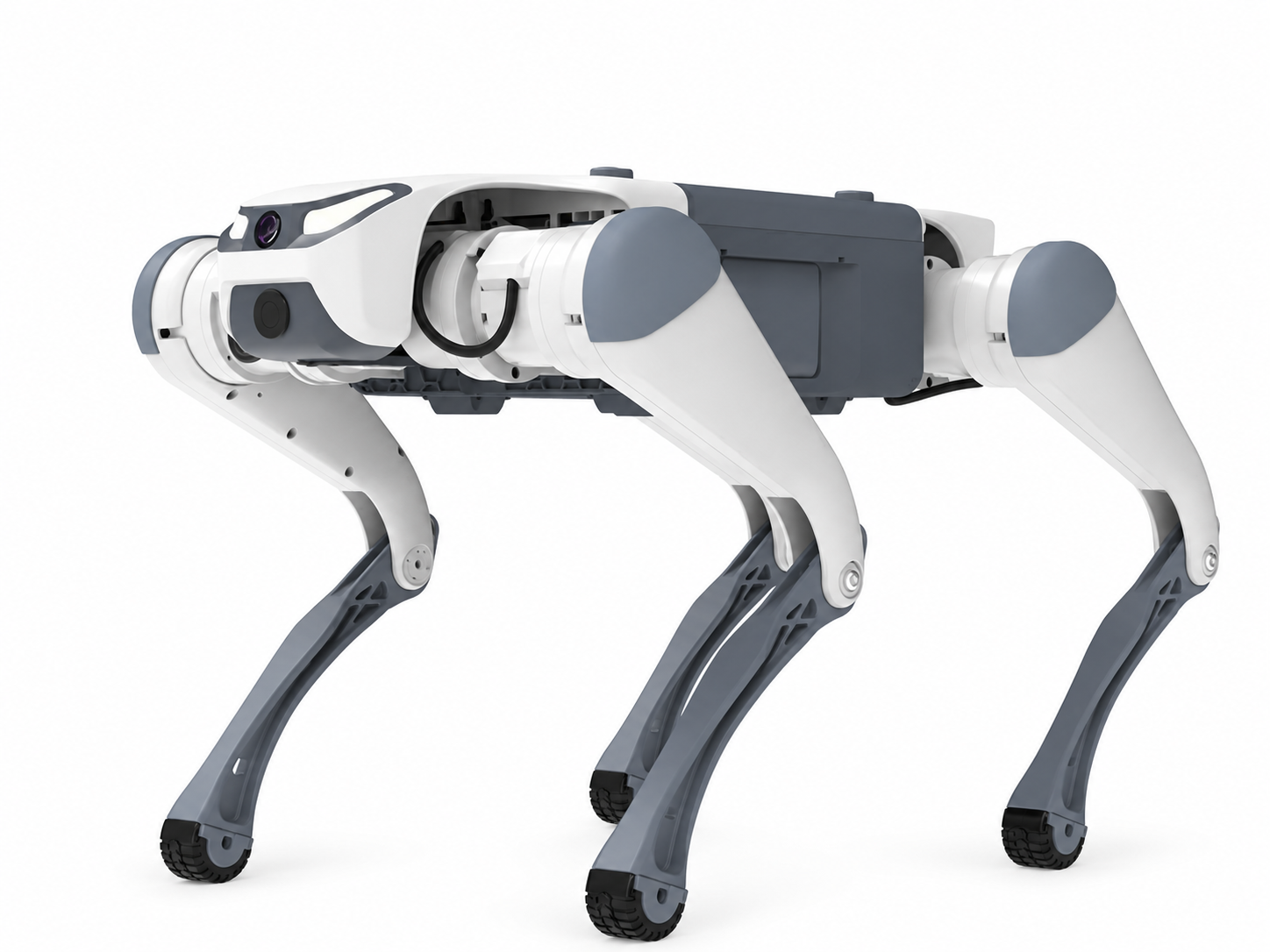
Manufacturer's own photo.
Intended use, per the manufacturer
The manufacturer’s words
Education and scientific research
Source: deeprobotics.cn · Retrieved
The producer’s Chinese product panel labels each model. Lite3 gets (education and scientific research); X20 and X30 get (industry application). The ENGLISH Lite3 page says nothing about application at all – the category only exists on the Chinese page.
This category is not our assessment.
Every field in the schema
9 of 33 fields statedImperial figures are our own conversion unless the manufacturer states an imperial figure itself. The source letter always belongs to the metric figure — a conversion has no source of its own.
| Field | Value | Source and caveats |
|---|---|---|
| Physical | ||
| Weight | 12kg26.5lbOur conversion from 12 kg. The manufacturer does not state an imperial figure itself, so the conversion has no source of its own. | A CaveatIncludes battery. The value is the Basic variant's.
|
| Length | 61cm24inOur conversion from 61 cm. The manufacturer does not state an imperial figure itself, so the conversion has no source of its own. | A |
| Width | 37cm14.6inOur conversion from 37 cm. The manufacturer does not state an imperial figure itself, so the conversion has no source of its own. | A |
| Height | 40.6cm16inOur conversion from 40.6 cm. The manufacturer does not state an imperial figure itself, so the conversion has no source of its own. | A CaveatHeight increases with the sensor package. The value is the Basic variant's.
|
| Degrees of freedom | not stated | |
| Payload, walking | 5kg11lbOur conversion from 5 kg. The manufacturer does not state an imperial figure itself, so the conversion has no source of its own. | B CaveatThe Chinese label is CONTINUOUS walking load; the English one just says Walking Load. The value is the Basic variant's.
|
| Payload, standing | not stated | |
| Max speed | not stated | |
| Max slope | 40° | A NoteSame for all four variants. |
| Single obstacle | not stated | |
| Stair step, continuous | 18cm7.09inOur conversion from 18 cm. The manufacturer does not state an imperial figure itself, so the conversion has no source of its own. | B CaveatOnly the Chinese page decides which field the figure belongs in. The CN label is continuous stair height; the EN label is just the word Stair. Reading only English, the figure could just as easily land in obstacle_single – and then a continuous stair height would be compared with other robots’ single steps, which are 2-4 times larger. |
| IP rating | not stated | |
| Operating temperature, low | not stated | |
| Operating temperature, high | not stated | |
| Power | ||
| Battery | not stated | |
| Runtime | 90–120minWarning: load condition not stated | A CaveatNo load condition given. Range falls as equipment is added; the schema has no range field.
|
| Hot-swap battery | not stated | |
| Charge time | not stated | |
| Docking station | not stated | |
| Sensing and autonomy | ||
| LiDAR | not stated | |
| Cameras | not stated | |
| Onboard compute | not stated | |
| ROS 2 | not stated | |
| SDK languages | not stated | |
| Autonomy level | stops for obstacles; follows person | A NoteQualitative. The value is the Basic variant's.
|
| Payload and expansion | ||
| Mounting interface | not stated | |
| Power out | not stated | A NoteThe page states External Power Input (24V/12V/5V). That is power IN, not out. The old draft counted it as power out – the same mistake as the 72V power input on the Lynx M20. |
| Data ports | no | B NoteThe Basic column explicitly states NONE (CN) / (EN). That is a NO, not not-stated. The value is the Basic variant's.
|
| Commercial | ||
| Indicative price | not stated | |
| EU | ||
| CE stated | not stated | Records only what the manufacturer states regarding CE marking. |
| FCC stated | not stated | |
| UL stated | not stated | |
| CCC stated | not stated | |
Stair step and payload each exist in two variants. Only compare fields with the same label.
Notes
- Four variants share one product page. Payload falls as equipment is added: 5, 4.5, 4, and 2.5 kg — the manufacturer subtracts sensor weight from payload.
The manufacturer’s own page
The manufacturer’s original product page for this model.
Open the manufacturer’s page for Jueying Lite3https://deeprobotics.cn/en/index/product1.html
Sources
- A Manufacturer product page. deeprobotics.cn/en/index/product1.html · Retrieved
- B www.deeprobotics.cn/robot/index/product1.html · Retrieved
One line per source, not per figure: a source has one retrieval date. The letter beside a figure points to the line it came from.