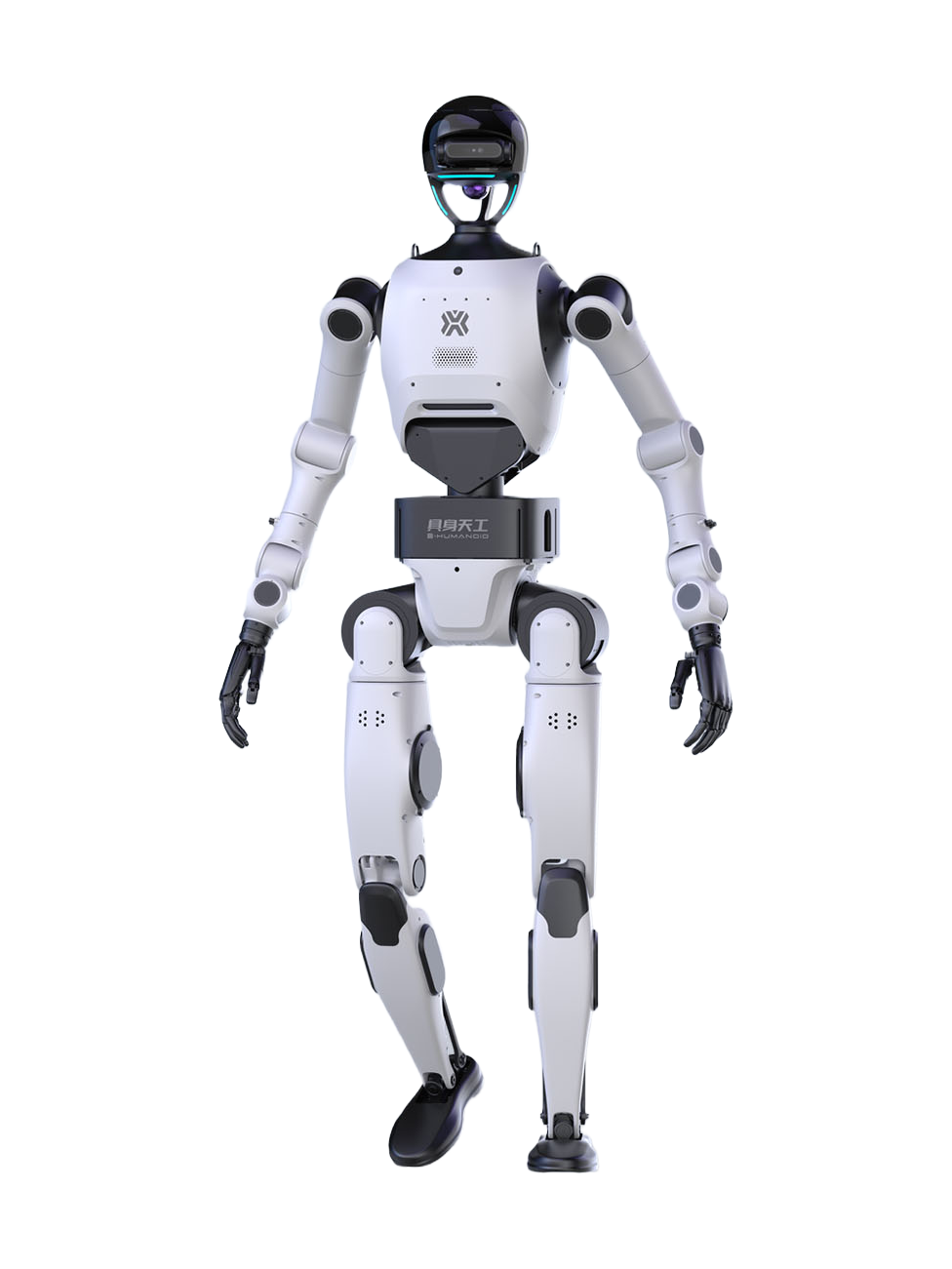
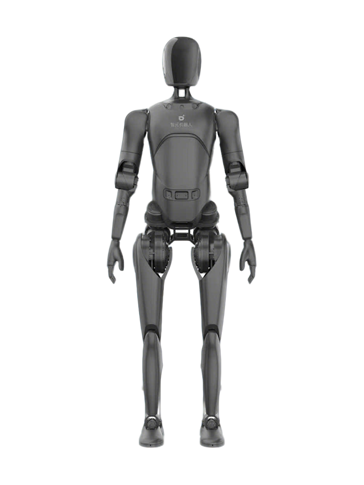
D9
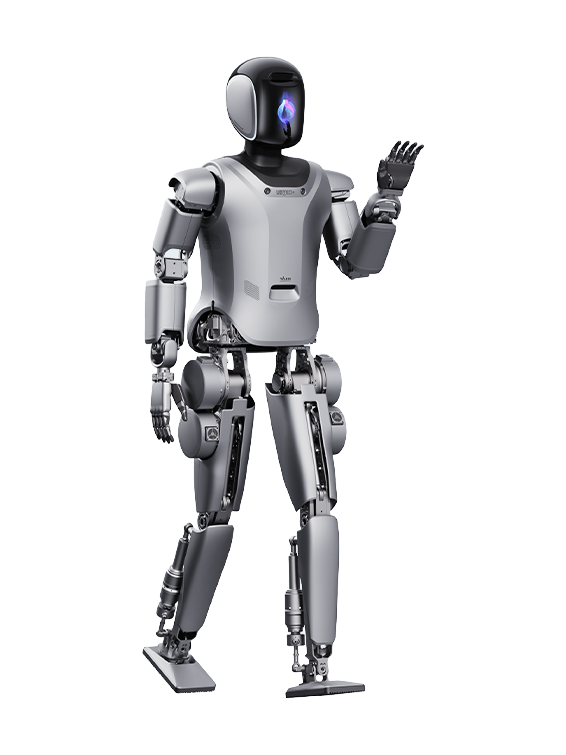
Pudu Robotics D9 is a humanoid robot from China, first released 2024.
Sources retrieved: (A)
- Status
- In production
- Indicative price
- Not stated
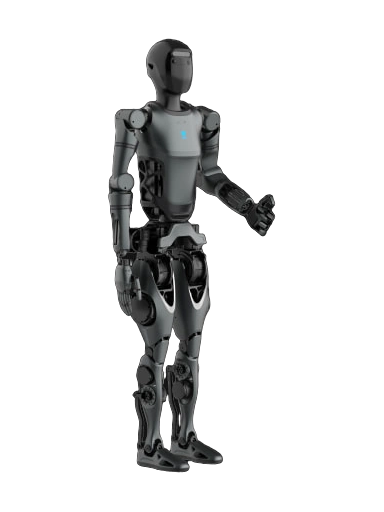
Manufacturer's own photo.
Specifications
7 of 33 stated 26 not stated
26 fields hidden
How to read the figuresShow guideClose
- not statedNo source
- noStated by a source
- 0Reported as zero
- ASource
- A*Source with a caveat (select it)
- CERecords only what the manufacturer states regarding CE marking.
Select a source marker for source details and notes.
Physical4/14 disclosed
Power1/5 disclosed
Sensing and autonomy2/6 disclosed
Payload and expansion0/3 disclosed
Commercial0/1 disclosed
Compliance & certifications0/4 disclosed
Against the field
Each strip holds every robot of this type in the guide that states the figure, one bar per group of values. Further right means a larger figure, not a better robot. A taller bar means more robots in that group.
Height
170cm66.93inThe manufacturer’s own imperial figure.
156 humanoids state a height
62 state a higher figure, 80 a lower one. 11 more state exactly the same figure. 2 state only a bound (≥ or ≤) and are not ranked. Neo1 lies beyond the end of the axis and is drawn at its edge as an open bar.
Weight
65kg143.3lbThe manufacturer’s own imperial figure.
152 humanoids state a weight
42 state a higher figure, 95 a lower one. 3 more state exactly the same figure. 1 states a range that includes this figure. 10 state only a bound (≥ or ≤) and are not ranked. Log scale: each step along the axis multiplies the value.
Degrees of freedom
42DoF
141 humanoids state degrees of freedom
22 state a higher figure, 99 a lower one. 5 more state exactly the same figure. 14 state only a bound (≥ or ≤) and are not ranked. Protoclone V1 lies beyond the end of the axis and is drawn at its edge as an open bar.
Max speed
7.2km/h4.47mphOur conversion from 2 m/s. The manufacturer does not state an imperial figure itself, so the conversion has no source of its own.
107 humanoids state a top speed
24 state a higher figure, 41 a lower one. 10 more state exactly the same figure. 2 state a range that includes this figure. 29 state only a bound (≥ or ≤) and are not ranked.
Notes
Leg and arm length are given only per segment, never as a single whole-body length/width figure: “Leg Length: Thigh 325mm, Calf 383mm” and “Arm Length: Arm 580mm, Hand 220mm”.
Degrees of freedom: producer states “Total DOF 42”, with a breakdown of single-leg DOF 6 and single-arm DOF 7.
The dexterous hand (PUDU DH11) has its own detailed spec block - 500g weight, 11 DOF (6 motor / 5 passive), 12 tactile sensing regions, 1018 tactile sensor pixels, maximum palm-finger grip 30N, maximum lifting load 40kg, palm-finger bend speed 150 degrees/s, thumb bend speed 191 degrees/s - all specific to the hand, not the whole robot.
Maximum joint torque is stated as 352 N*m, a servo-joint spec rather than a whole-body figure.
The page's own disclaimer: “In the product promotional materials, some example features are not yet available to customers; specific functionalities shall be based on the sales contract” and “The product undergoes continuous iteration and optimization, and the shipped version may differ from the promotional content.”
Producer states “Maximum Payload 20 kg (44.09 pounds), Single-arm 10 kg (22.05 pounds) (Testing Environment)”, without saying whether the 20 kg figure is measured while walking or standing.
The Robot Report reported on 26 December 2024 that Pudu Technology had unveiled its first full-sized bipedal humanoid robot, the PUDU D9, the week before.
Sources
One line per source, not per figure: a source has one retrieval date.
- Apudurobotics.com/en/products/d9Main source. Retrieved
More robots
Same manufacturer
D7Pudu Robotics
FlashBot ArmPudu Robotics
PUDU D5Pudu RoboticsQuadruped
PUDU D5-WPudu RoboticsQuadruped