MIT Biomimetic Robotics LaboratoryUnited States2018
Cheetah 3
- Demonstrator
- Over 40 kg
- Research and development
- Defence and emergency response
Key figures as stated by the manufacturer
2 of 6 stated · 4 gapsDemonstrator- Weight 41kg90.4lbOur conversion from 41 kg. The manufacturer does not state an imperial figure itself, so the conversion has no source of its own.A
- Payload, walking not stated
- Runtime not stated
- Max speed 10.8km/h6.71mphOur conversion from 10.8 km/h. The manufacturer does not state an imperial figure itself, so the conversion has no source of its own.A
- IP rating not stated
- Indicative price not stated
Deviations and variants in the key figures (2)
Weight
NoteRobot weighs approximately 90 pounds (41 kg).
Max speed
NoteDemonstrated experimental running speed up to 3.0 m/s.
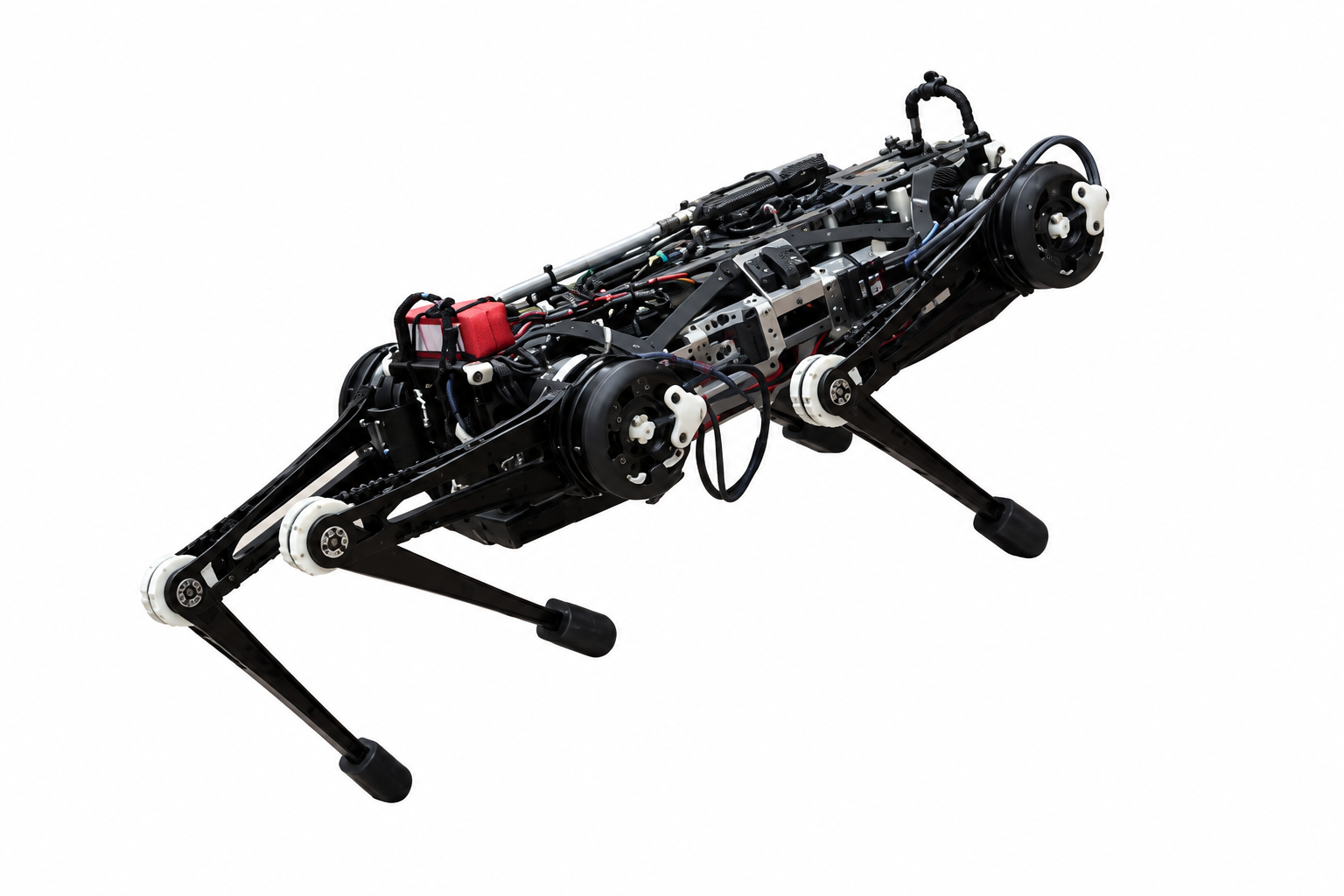
Manufacturer's own photo.
Intended use, per the manufacturer
The manufacturer’s words
Designed to explore hazardous environments and industrial facilities like power plants without relying on vulnerable visual sensors.
Source: news.mit.edu · Retrieved
This category is not our assessment.
Every field in the schema
5 of 33 fields statedImperial figures are our own conversion unless the manufacturer states an imperial figure itself. The source letter always belongs to the metric figure — a conversion has no source of its own.
| Field | Value | Source and caveats |
|---|---|---|
| Physical | ||
| Weight | 41kg90.4lbOur conversion from 41 kg. The manufacturer does not state an imperial figure itself, so the conversion has no source of its own. | A NoteRobot weighs approximately 90 pounds (41 kg). |
| Length | not stated | |
| Width | not stated | |
| Height | not stated | |
| Degrees of freedom | 12DoF | A Note12 custom electric actuators providing 3 degrees of freedom per leg. |
| Payload, walking | not stated | |
| Payload, standing | not stated | |
| Max speed | 10.8km/h6.71mphOur conversion from 10.8 km/h. The manufacturer does not state an imperial figure itself, so the conversion has no source of its own. | A NoteDemonstrated experimental running speed up to 3.0 m/s. |
| Max slope | not stated | |
| Single obstacle | 78.7cm31inOur conversion from 78.7 cm. The manufacturer does not state an imperial figure itself, so the conversion has no source of its own. | A NoteCapable of vertical jumps of over 31 inches (787 mm). |
| Stair step, continuous | 180mm7.09inOur conversion from 180 mm. The manufacturer does not state an imperial figure itself, so the conversion has no source of its own. | A NoteDemonstrated continuous ascending and descending on standard stairways without vision sensors. |
| IP rating | not stated | |
| Operating temperature, low | not stated | |
| Operating temperature, high | not stated | |
| Power | ||
| Battery | not stated | |
| Runtime | not stated | |
| Hot-swap battery | not stated | |
| Charge time | not stated | |
| Docking station | not stated | |
| Sensing and autonomy | ||
| LiDAR | not stated | |
| Cameras | not stated | |
| Onboard compute | not stated | |
| ROS 2 | not stated | |
| SDK languages | not stated | |
| Autonomy level | not stated | |
| Payload and expansion | ||
| Mounting interface | not stated | |
| Power out | not stated | |
| Data ports | not stated | |
| Commercial | ||
| Indicative price | not stated | |
| EU | ||
| CE stated | not stated | Records only what the manufacturer states regarding CE marking. |
| FCC stated | not stated | |
| UL stated | not stated | |
| CCC stated | not stated | |
Stair step and payload each exist in two variants. Only compare fields with the same label.
Notes
- An agile research quadruped from MIT's Biomimetic Robotics Lab.
- Pioneered blind locomotion algorithms to cross obstacles, rough terrain and stairs without cameras or vision sensors.
The manufacturer’s own page
The manufacturer’s original product page for this model.
Open the manufacturer’s page for Cheetah 3https://news.mit.edu/2018/blind-cheetah-robot-climb-stairs-obstacles-disaster-zones-0705
Sources
- A Manufacturer product page. news.mit.edu/2018/blind-cheetah-robot-climb-stairs-obstacles-disaster-zones-0705 · Retrieved
One line per source, not per figure: a source has one retrieval date. The letter beside a figure points to the line it came from.