T1
Other variants Basic · Standard · Customized
Figures below are for T1.
Booster Robotics T1 is a humanoid robot from China, first released 2024.
Sources retrieved: (A, B)
- Status
- In production
- Applications
- Indicative price
- Not stated
- Person
175 cm68.9 in - Height 118 cm46.5 in
Width 47 cm18.5 in
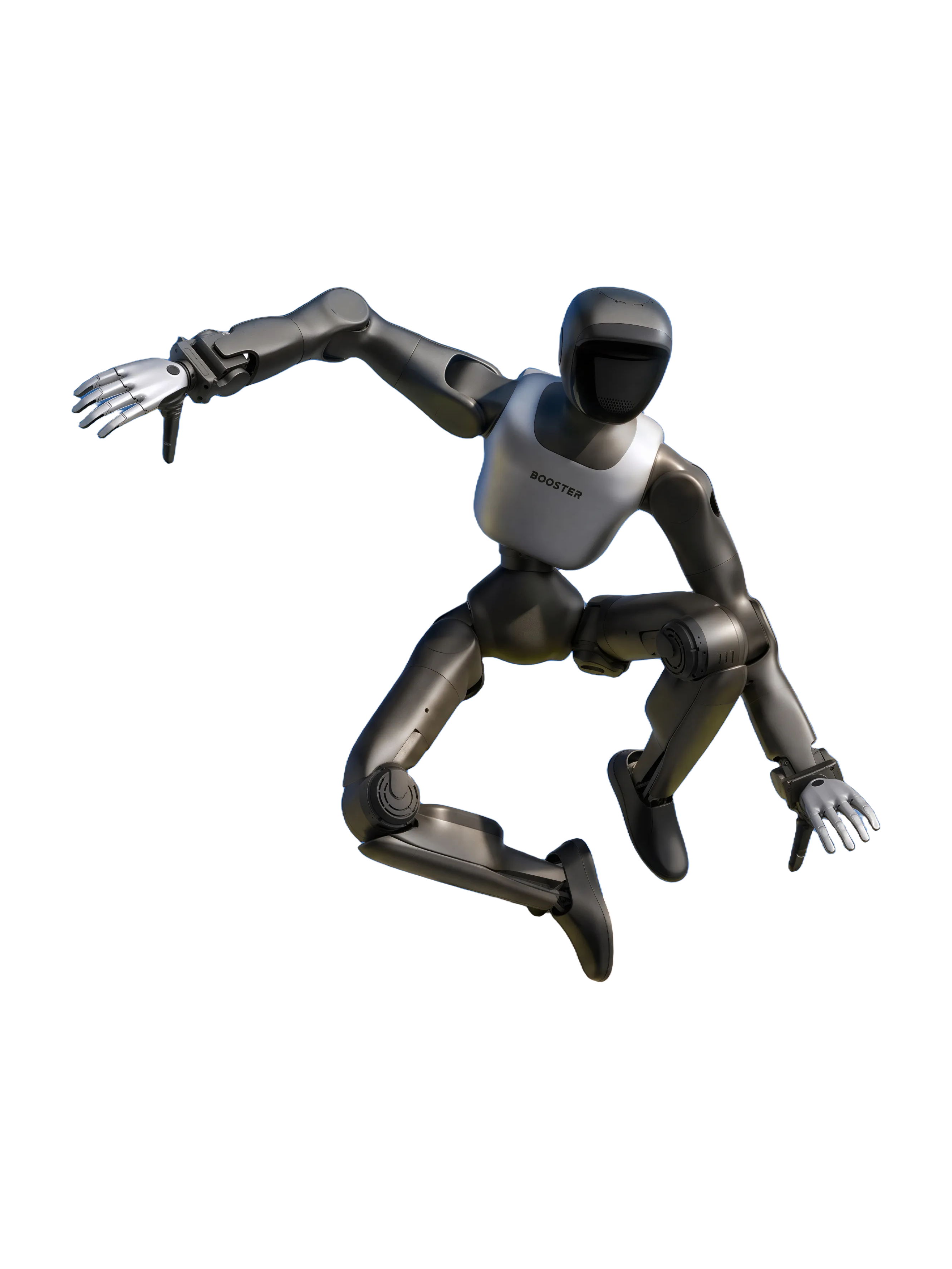
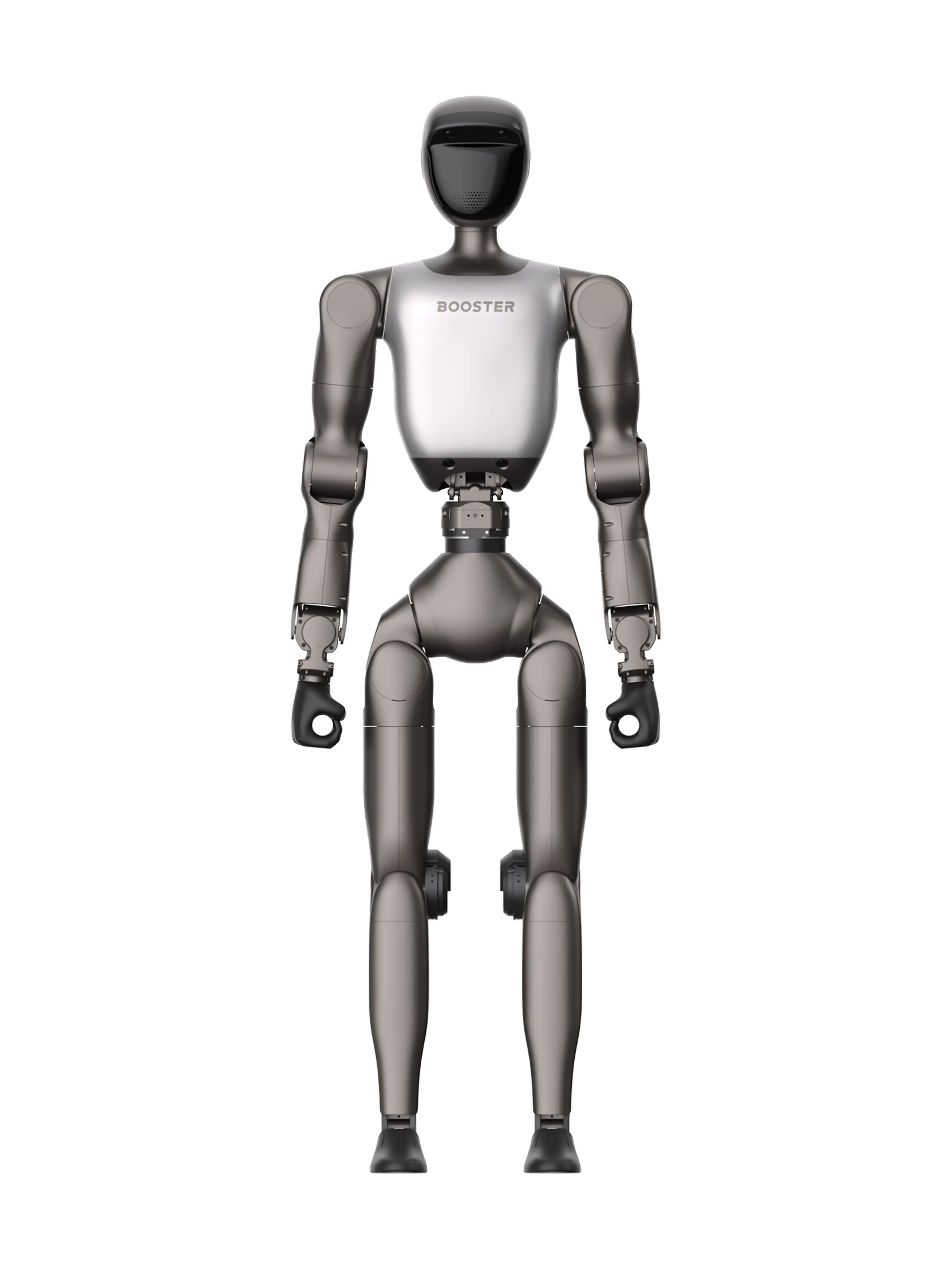
Manufacturer's own photo.
Drawn at one scale next to a 175 cm person, from the figures the maker states: height 118 cm and width 47 cm.Drawn at one scale next to a 68.9 in person, from the figures the maker states, converted to inches: height 46.5 in and width 18.5 in.
Specifications
9 of 33 stated 24 not stated
24 fields hidden
How to read the figuresShow guideClose
- not statedNo source
- noStated by a source
- 0Reported as zero
- ASource
- A*Source with a caveat (select it)
- CERecords only what the manufacturer states regarding CE marking.
Select a source marker for source details and notes.
Physical5/14 disclosed
Power1/5 disclosed
Sensing and autonomy2/6 disclosed
Payload and expansion1/3 disclosed
Commercial0/1 disclosed
Compliance & certifications0/4 disclosed
Against the field
Each strip holds every robot of this type in the guide that states the figure, one bar per group of values. Further right means a larger figure, not a better robot. A taller bar means more robots in that group.
Height
118cm46.5inOur conversion from 118 cm. The manufacturer does not state an imperial figure itself, so the conversion has no source of its own.
156 humanoids state a height
142 state a higher figure, 11 a lower one. 2 state only a bound (≥ or ≤) and are not ranked. Neo1 lies beyond the end of the axis and is drawn at its edge as an open bar.
Weight
approximately 30kgapproximately 66.1lbOur conversion from 30 kg. The manufacturer does not state an imperial figure itself, so the conversion has no source of its own.
152 humanoids state a weight
127 state a higher figure, 11 a lower one. 3 more state exactly the same figure. 10 state only a bound (≥ or ≤) and are not ranked. Log scale: each step along the axis multiplies the value.
Degrees of freedom
23DoF
141 humanoids state degrees of freedom
108 state a higher figure, 12 a lower one. 4 more state exactly the same figure. 2 state a range that includes this figure. 14 state only a bound (≥ or ≤) and are not ranked. Protoclone V1 lies beyond the end of the axis and is drawn at its edge as an open bar.
Runtime
120minNote: load condition not stated
108 humanoids state a runtime
38 state a higher figure, 9 a lower one. 38 more state exactly the same figure. 4 state a range that includes this figure. 18 state only a bound (≥ or ≤) and are not ranked.
Notes
Three purchasable configurations are listed on the producer's own page - Basic, Standard and Customized - which differ only in the hand or end-effector fitted and, for onboard compute, whether a separate CPU is included. Dimensions, weight, actuators and joint movement ranges are identical across all three; the figures here are for the Basic configuration.
The total degree-of-freedom count rises with the end-effector: 23 for the base hand, 31 with an added gripper, or 41 with a dexterous hand, each with its own per-limb breakdown (legs, waist, arms, hands, head).
Leg length (57 cm) and arm length (45 cm) are given as separate limb measurements alongside the overall body dimensions.
Joint movement ranges are given for the waist, hip, knee and ankle (for example, a knee range of 0 to 123 degrees), together with a maximum actuator torque of 130 N.m and a dual encoder per joint.
Basic, Standard and Customized configurations are sold, differing only in the fitted hand/end-effector (bare hand / gripper / dexterous hand) and, for the Basic configuration, the absence of a separate CPU. The figures are for the Basic configuration.
Mike Kalil's technology news site reports that Booster launched the T1 in August 2024 at the World Robot Conference in Beijing.
Intended use, per the manufacturer. “Our early strategy is oriented towards scientific research and education scenarios.”
Sources
One line per source, not per figure: a source has one retrieval date.
- Abooster.tech/booster-t1/Main source. Retrieved
- Bbooster.tech/about-us/Retrieved
More robots
Same manufacturer
All robots from Booster Robotics