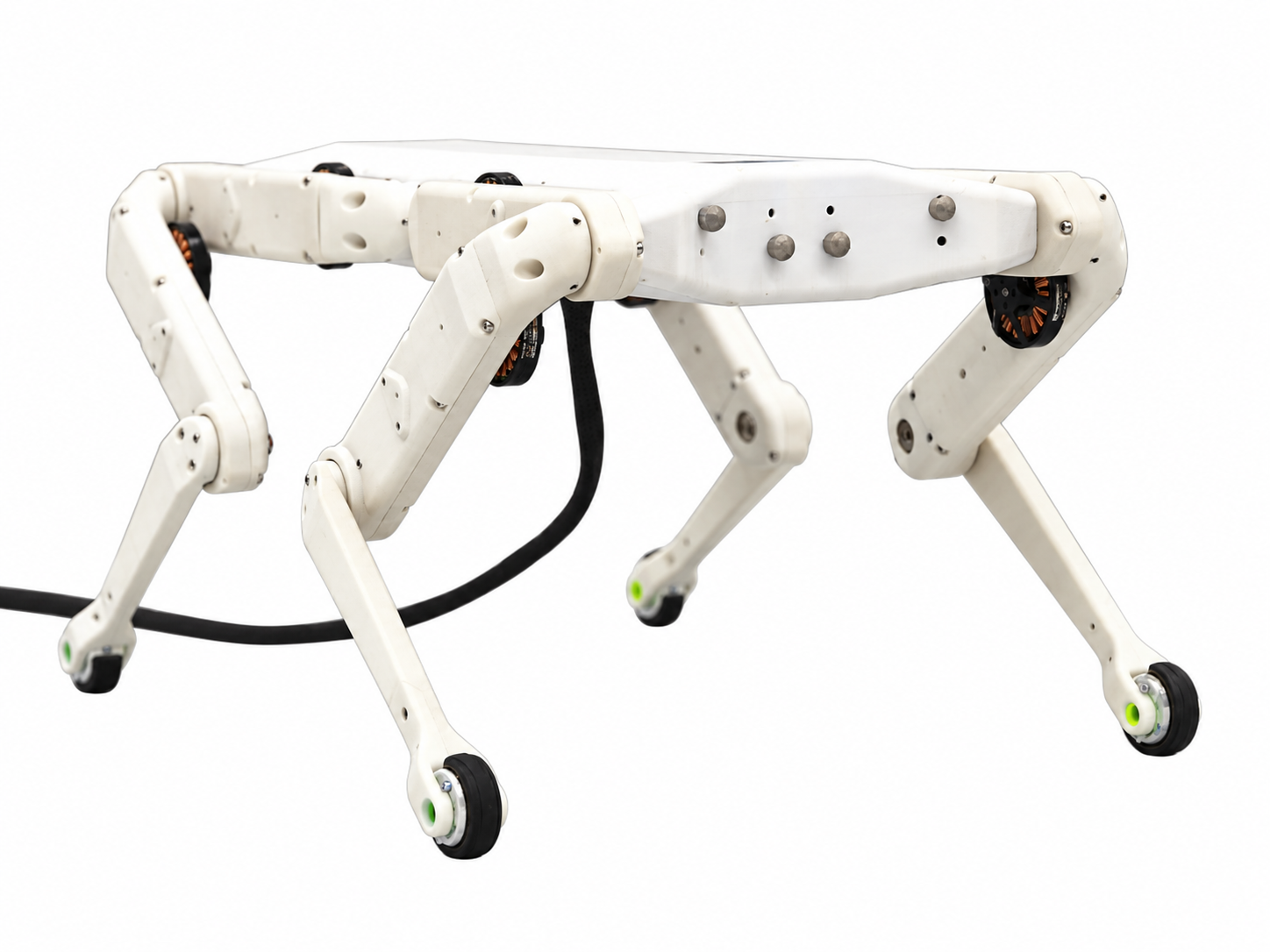
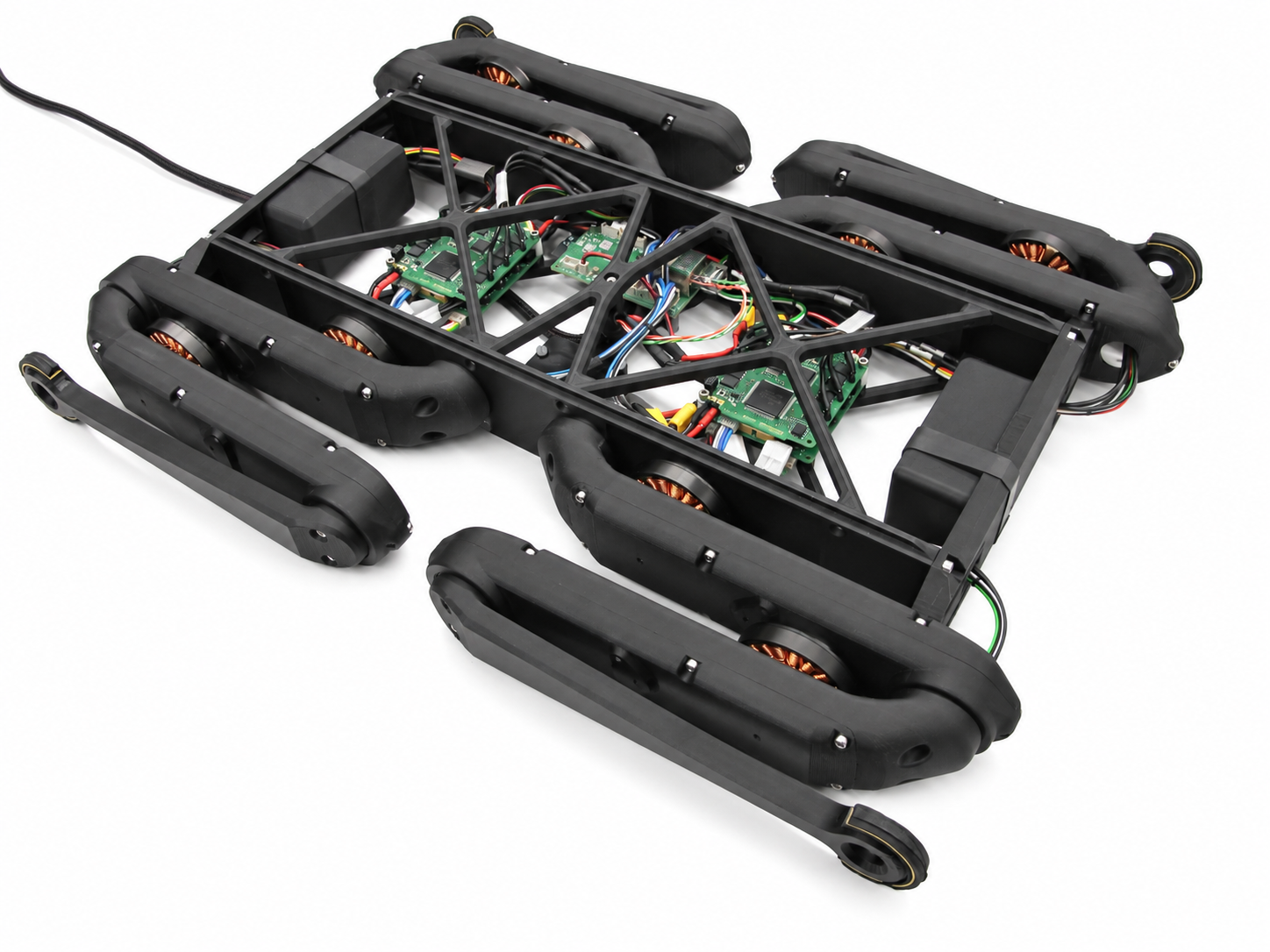
Oncilla
A quadruped robot from Switzerland, first released 2018.
Sources retrieved: 7 September 2026 (A)
- Status
- Discontinued
- Applications
- Indicative price
- Not stated
- Intended use, per the manufacturer
- A versatile open-source quadruped research robot with compliant pantograph legsSource and note: Intended use, per the manufacturerA frontiersin.org/journals/robotics-and-ai/articles/10.3389/frobt.2018.00067/full · Retrieved 7 September 2026
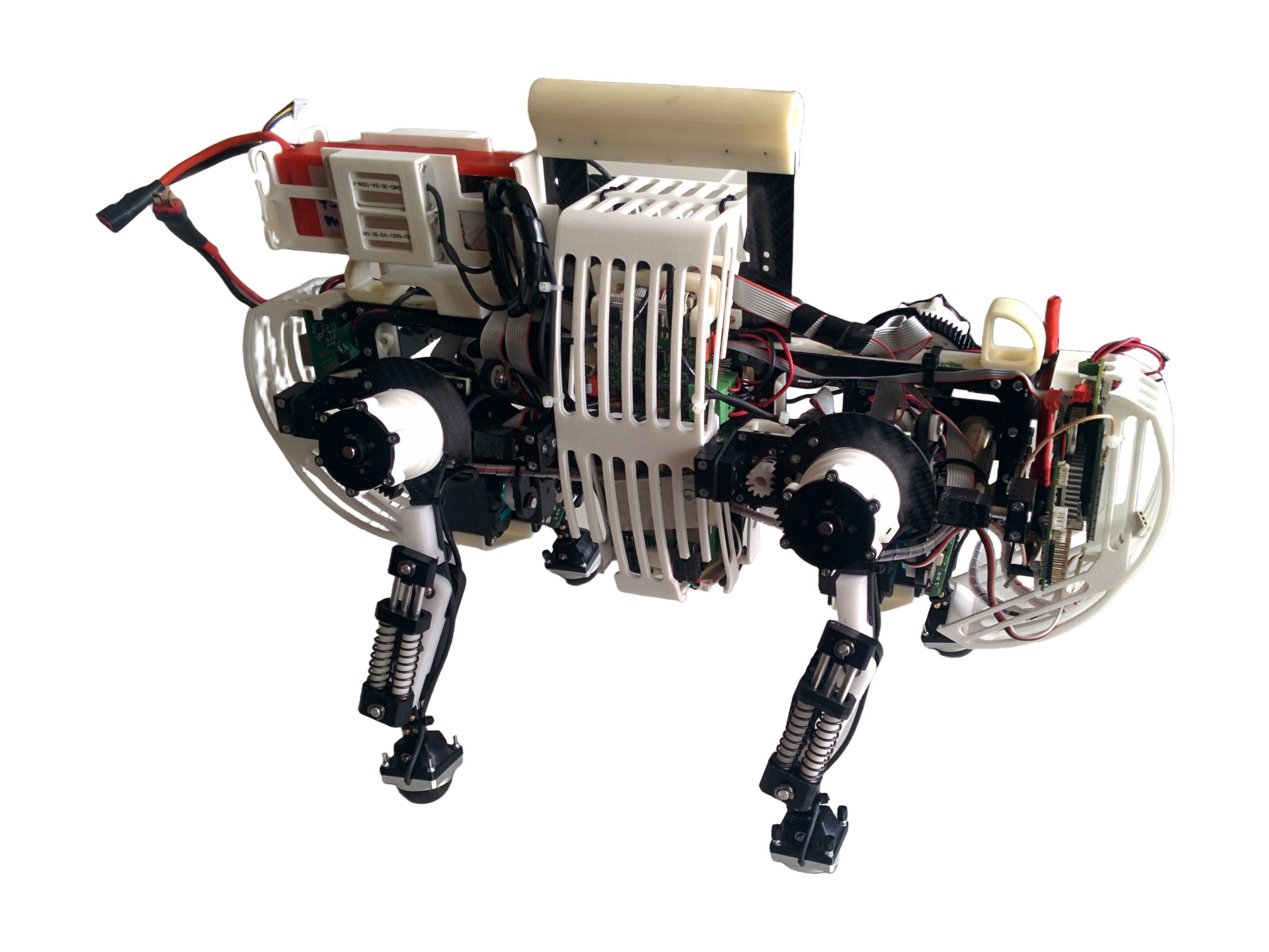
- Person
175 cm68.9 in - 40 cm15.7 inHeight
31 cm12.2 in
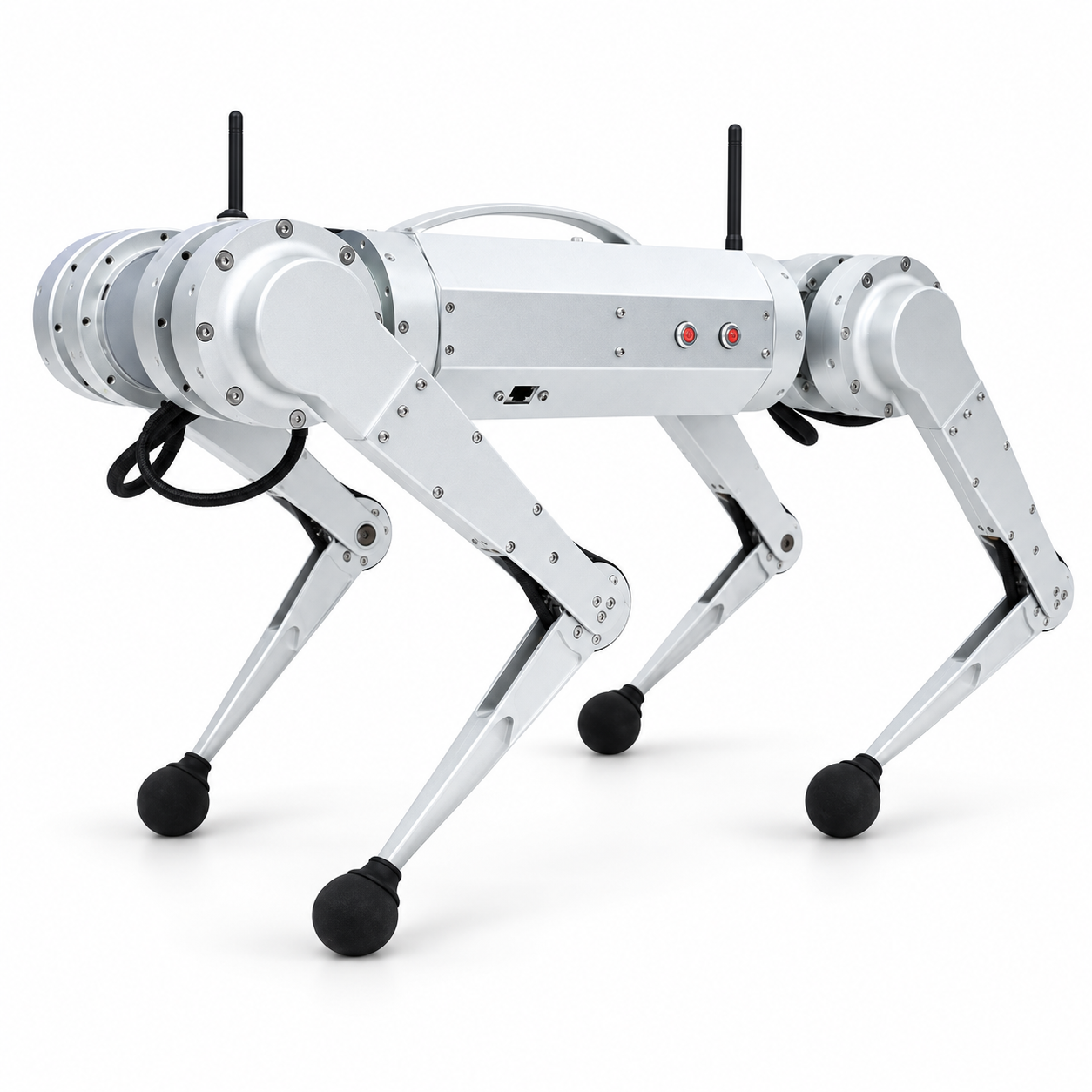
Manufacturer's own photo.
Drawn at one scale next to a 175 cm person, from the figures the maker states: height 31 cm and length 40 cm.Drawn at one scale next to a 68.9 in person, from the figures the maker states, converted to inches: height 12.2 in and length 15.7 in.
Specifications
10/33 specifications disclosed 23 not stated
23 fields hidden
Not statedThe manufacturer states nothing about this field.NoStated: the robot does not have this.A marker with an asterisk (*) also carries a caveat.
Select a source marker for source details and notes.
Physical7/14 disclosed
Power1/5 disclosed
Sensing and autonomy2/6 disclosed
C++ Java Python Common LispPayload and expansion0/3 disclosed
Commercial0/1 disclosed
Compliance & certifications0/4 disclosed
Against the field
Each strip holds every robot of this type in the guide that states the figure, one bar per group of values. Further right means a larger figure, not a better robot.
Height
31cm12.2inOur conversion from 310 mm. The manufacturer does not state an imperial figure itself, so the conversion has no source of its own.
89 quadrupeds state a height
83 state a higher figure, 2 a lower one.
Weight
5.1kg11.2lbOur conversion from 5.1 kg. The manufacturer does not state an imperial figure itself, so the conversion has no source of its own.
124 quadrupeds state a weight
115 state a higher figure, 4 a lower one. Log scale: each step along the axis multiplies the value.
Degrees of freedom
12DoF
76 quadrupeds state degrees of freedom
15 state a higher figure, 4 a lower one. 56 more state exactly the same figure.
Runtime
at most 30minNote: load condition not stated
104 quadrupeds state a runtime
Oncilla states an upper limit, not one figure, so it is shown open-ended and not ranked against the others.
Max speed
at most 2.268km/hat most 1.41mphOur conversion from 0.63 m/s. The manufacturer does not state an imperial figure itself, so the conversion has no source of its own.
113 quadrupeds state a top speed
Oncilla states an upper limit, not one figure, so it is shown open-ended and not ranked against the others.
Notes
An open-source research platform from EPFL's Biorobotics Lab, built under the EU's AMARSi project, using spring-loaded pantograph legs with a hip abduction mechanism.
Fully open hardware and software, with a three-layer API supporting C++, Python, Java and Common Lisp, and a shared interface to the Webots simulator.
Sources
One line per source, not per figure: a source has one retrieval date.
- Afrontiersin.org/journals/robotics-and-ai/articles/10.3389/frobt.2018.00067/fullSecondary. Retrieved 7 September 2026
More robots
Same manufacturer
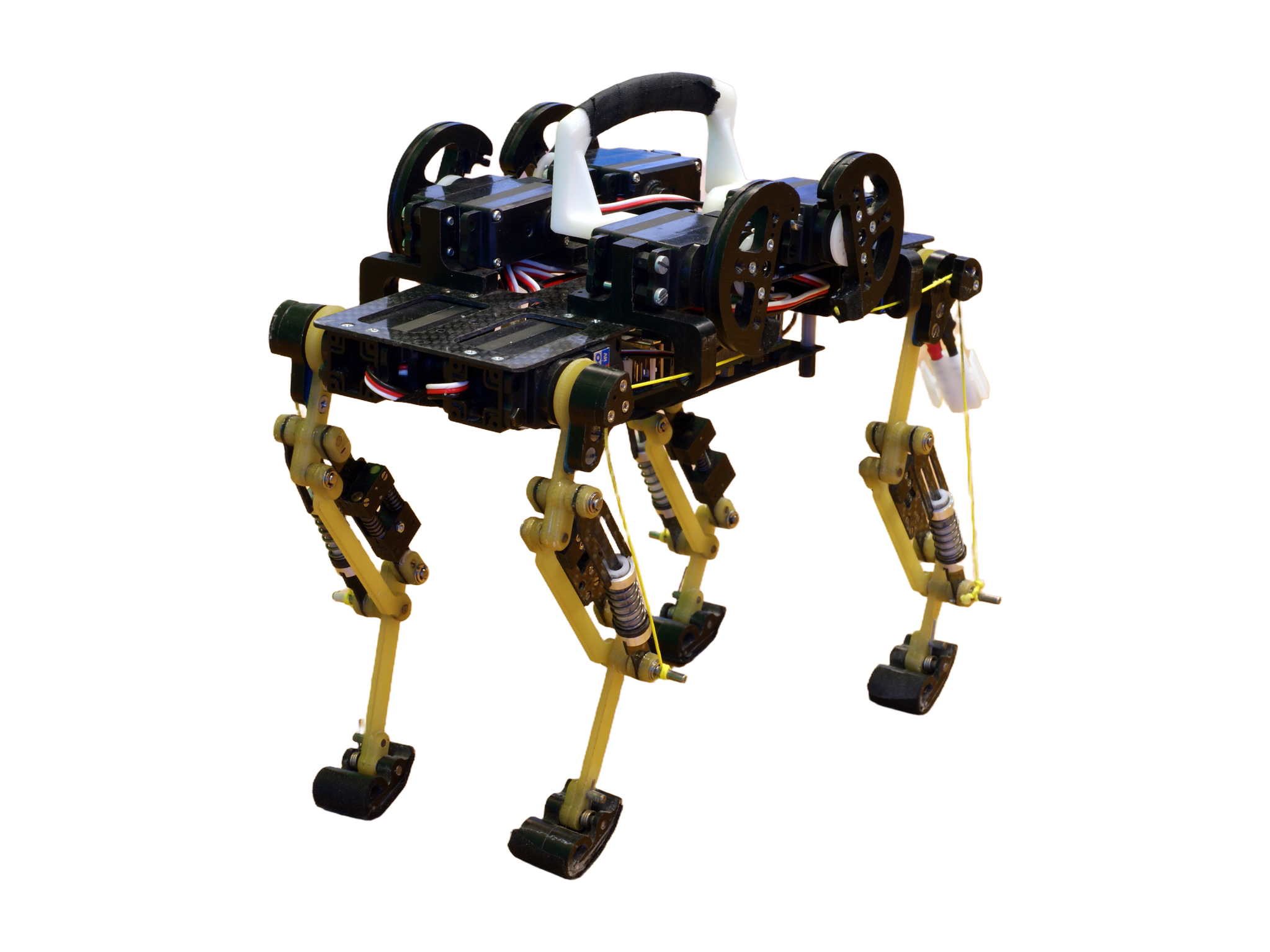
All robots from EPFL Biorobotics Laboratory