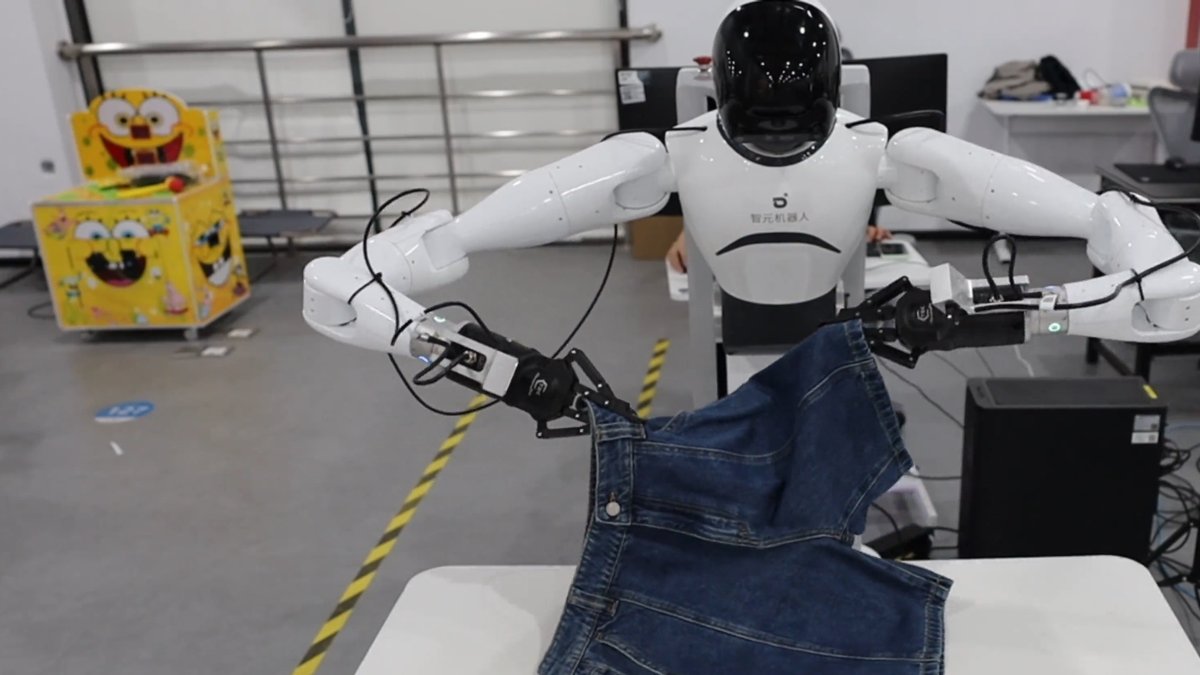
GigaAI · robot AI model
GigaBrain-0.7
China · 2026
Sources retrieved: 9 November 2026 (A, B, C, D)
- Model type
- Vision-language-action (VLA)Source and note: Model typeA arxiv.org/html/2608.15875 · Retrieved 9 November 2026Note. Paper: “a one-stage, multi-embodiment VLA pretraining framework”. Hugging Face model card tag: “- vision-language-action”.
- What it controls
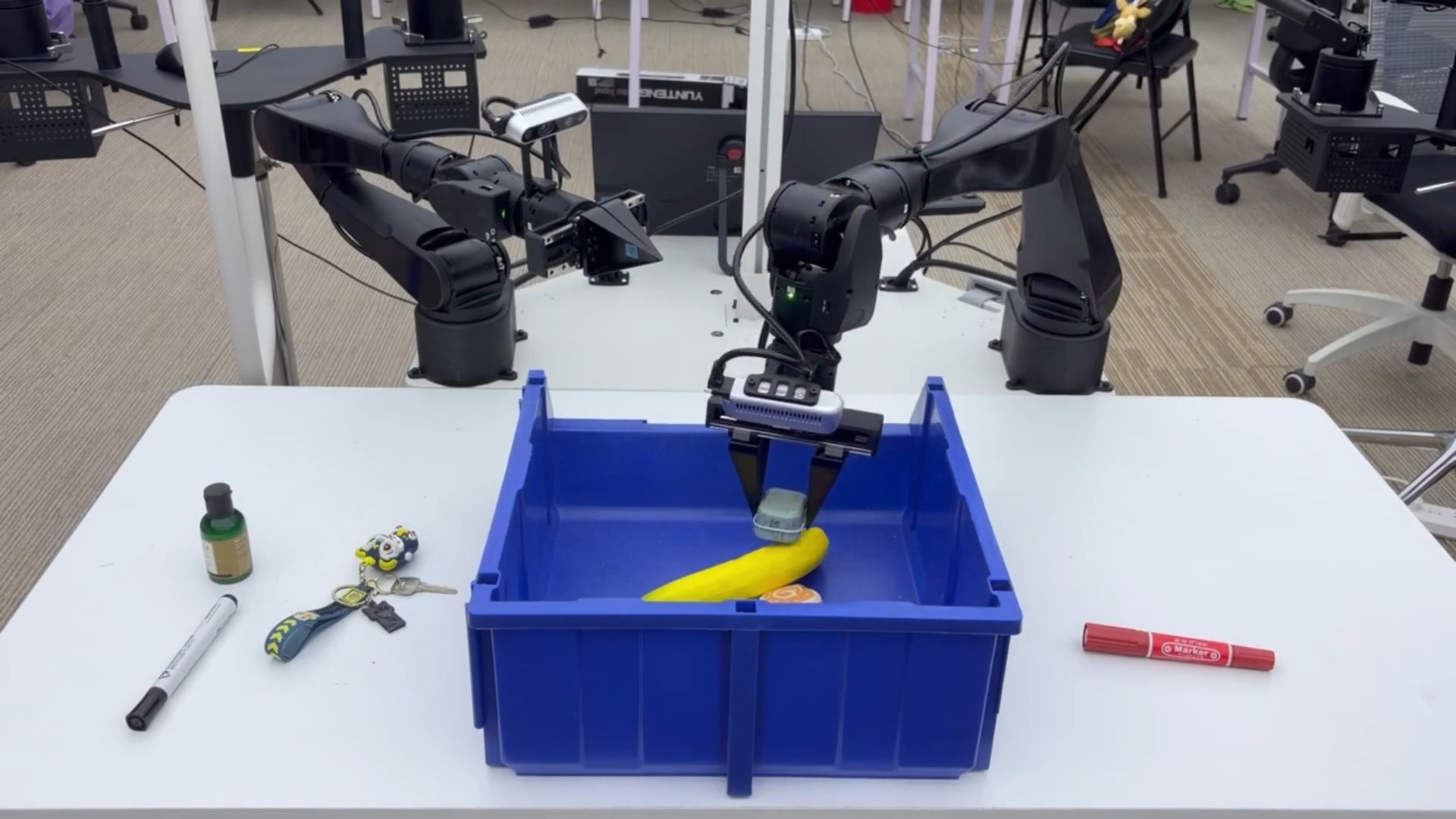
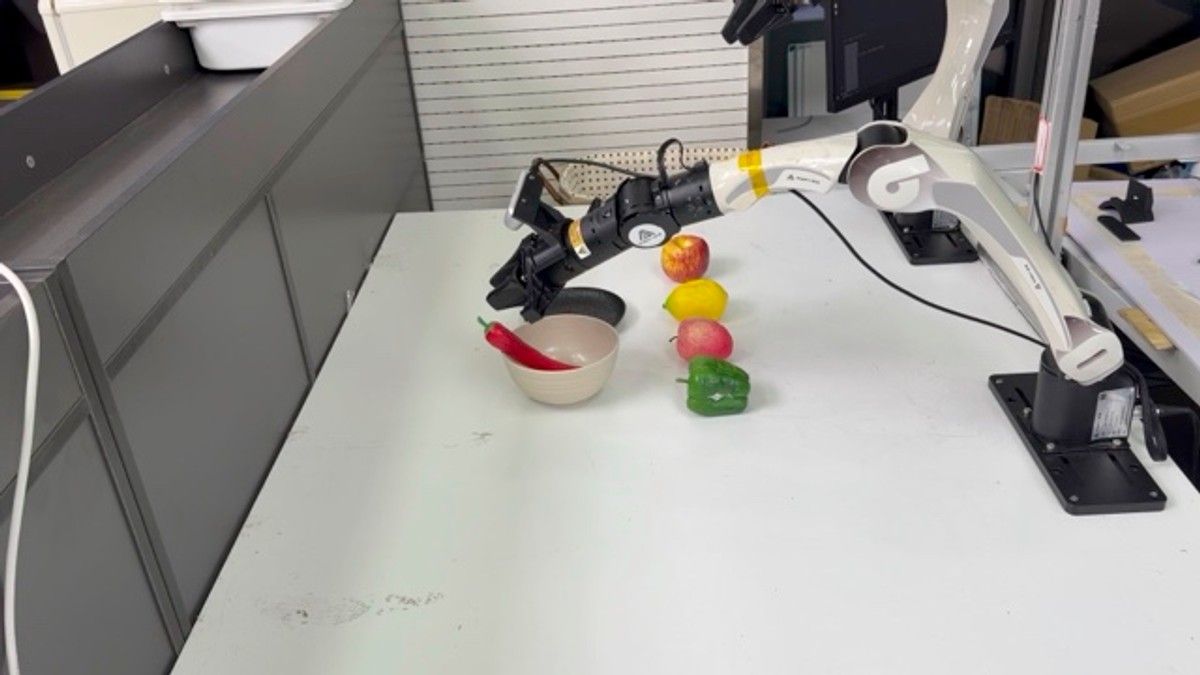
- Arms and handsSource and note: What it controlsA arxiv.org/html/2608.15875 · Retrieved 9 November 2026Note. Paper: System 1 “generates continuous action chunks via flow matching”. The paper's AgileX PiPER platform is “a low-cost dual-arm manipulator widely used for tabletop manipulation benchmarking”. GitHub README, deployment: “The client publishes ROS arm and optional base commands”.
- Inputs
- Camera Language Robot stateSource and note: InputsA arxiv.org/html/2608.15875 · Retrieved 9 November 2026Note. Paper, System 1 (action and control): “from multimodal observations, language instructions, proprioceptive states, and higher-level contextual signals”.
- Access
- Open weights (download)Source and note: AccessB github.com/open-gigaai/giga-brain-0 · Retrieved 9 November 2026Note. GitHub README news: “Released the GigaBrain-0.7 Code, Model and Sample Data.” The Hugging Face repository is listed as not gated (gated: false).
- Parameters
- 3.5BSource and note: ParametersB github.com/open-gigaai/giga-brain-0 · Retrieved 9 November 2026Note. GitHub README, download table: “The pretrained 3.5B base model for GigaBrain-0.7.” The Hugging Face metadata counts 4,121,726,448 parameters in the checkpoint files (safetensors total). Paper, layers: “System 1 extends a PaliGemma2 (3B) backbone with a dedicated Action Expert (0.5B) for continuous action generation.” System 3 is a separate GigaWorld-1 “based world value model (5B)”.
- Base model
- PaliGemma2 (3B)Source and note: Base modelA arxiv.org/html/2608.15875 · Retrieved 9 November 2026Note. Paper: “System 1 extends a PaliGemma2 (3B) backbone with a dedicated Action Expert (0.5B) for continuous action generation.”
- Licence type
- Free, commercial useSource and note: Licence typeB github.com/open-gigaai/giga-brain-0 · Retrieved 9 November 2026Note. GitHub README: “Released the GigaBrain-0.7 Code, Model and Sample Data.” Licence tag on the model card: “license: apache-2.0”.
Specifications
10 of 14 stated 4 not stated
2 fields hidden 2 not-stated fields with a note stay ·
How to read the figuresShow guideClose
- not statedNo source
- yesStated by a source
- 0Reported as zero
- ASource
Select a source marker for source details and notes.
Release1/1 disclosed
Released16 August 2026
Source and note: ReleasedD arxiv.org/abs/2608.15875 · Retrieved 9 November 2026Note. [A] “Submitted on 16 Aug 2026”
Input and output3/4 disclosed
Model typeVision-language-action (VLA)
Source and note: Model typeA arxiv.org/html/2608.15875 · Retrieved 9 November 2026Note. Paper: “a one-stage, multi-embodiment VLA pretraining framework”. Hugging Face model card tag: “- vision-language-action”.
InputsCamera Language Robot state
Source and note: InputsA arxiv.org/html/2608.15875 · Retrieved 9 November 2026Note. Paper, System 1 (action and control): “from multimodal observations, language instructions, proprioceptive states, and higher-level contextual signals”.
What it controlsArms and hands
Source and note: What it controlsA arxiv.org/html/2608.15875 · Retrieved 9 November 2026Note. Paper: System 1 “generates continuous action chunks via flow matching”. The paper's AgileX PiPER platform is “a low-cost dual-arm manipulator widely used for tabletop manipulation benchmarking”. GitHub README, deployment: “The client publishes ROS arm and optional base commands”.
Degrees of freedom controlledNot stated
Source and note: Degrees of freedom controlledB github.com/open-gigaai/giga-brain-0 · Retrieved 9 November 2026Note. The README gives action widths per deployment profile, not controlled degrees of freedom: “The H01 release profile uses a 22D observation state and a 16D action.”
Size and speed1/2 disclosed
Parameters3.5B
Source and note: ParametersB github.com/open-gigaai/giga-brain-0 · Retrieved 9 November 2026Note. GitHub README, download table: “The pretrained 3.5B base model for GigaBrain-0.7.” The Hugging Face metadata counts 4,121,726,448 parameters in the checkpoint files (safetensors total). Paper, layers: “System 1 extends a PaliGemma2 (3B) backbone with a dedicated Action Expert (0.5B) for continuous action generation.” System 3 is a separate GigaWorld-1 “based world value model (5B)”.
Control rateNot stated
Where it runs and what it is built on1/2 disclosed
On robot or cloudNot stated
Base modelPaliGemma2 (3B)
Source and note: Base modelA arxiv.org/html/2608.15875 · Retrieved 9 November 2026Note. Paper: “System 1 extends a PaliGemma2 (3B) backbone with a dedicated Action Expert (0.5B) for continuous action generation.”
Openness3/3 disclosed
AccessOpen weights (download)
Source and note: AccessB github.com/open-gigaai/giga-brain-0 · Retrieved 9 November 2026Note. GitHub README news: “Released the GigaBrain-0.7 Code, Model and Sample Data.” The Hugging Face repository is listed as not gated (gated: false).
Licence documentApache-2.0
Source and note: Licence documentC huggingface.co/open-gigaai/GigaBrain-0.7-3.5B-Base · Retrieved 9 November 2026Note. Hugging Face model card tag: “license: apache-2.0”.
Licence typeFree, commercial use
Source and note: Licence typeB github.com/open-gigaai/giga-brain-0 · Retrieved 9 November 2026Note. GitHub README: “Released the GigaBrain-0.7 Code, Model and Sample Data.” Licence tag on the model card: “license: apache-2.0”.
The developer’s own claims1/2 disclosed
Learns new tasksNot stated
Source and note: Learns new tasksA arxiv.org/html/2608.15875 · Retrieved 9 November 2026Note. The paper reports zero-shot capabilities and post-training results: “in foundation zero-shot capabilities, language-conditioned instruction following, and post-training task success rates”. The README describes “keep the pretrained IDs unchanged when post-training from an existing checkpoint”.
Works across robotsYes
Source and note: Works across robotsA arxiv.org/html/2608.15875 · Retrieved 9 November 2026Note. Paper: “we conduct extensive real-world evaluations on the AgileX PiPER/PiPER-X and our in-house Maker H01 platforms”. Hugging Face model card: “GigaBrain-0.7, an embodied foundation model with substantially improved generalization across diverse robot embodiments”.Yes only if the developer itself says the model runs on different robot models, for example robots from two manufacturers or two of one manufacturer’s models. Several units of the same robot do not count.
Notes
GigaAI describes GigaBrain-0.7 as an embodied foundation model with substantially improved generalization across diverse robot embodiments.
GigaAI released the GigaBrain-0.7 code, model and sample data in August 2026.
GigaAI says the pretraining covers over 37,000 hours of heterogeneous embodied data.
Sources
One line per source, not per figure: a source has one retrieval date.
- Aarxiv.org/html/2608.15875Main source. Retrieved 9 November 2026
- Bgithub.com/open-gigaai/giga-brain-0Retrieved 9 November 2026
- Chuggingface.co/open-gigaai/GigaBrain-0.7-3.5B-BaseRetrieved 9 November 2026
- Darxiv.org/abs/2608.15875Retrieved 9 November 2026