REX G1
RoboScience REX G1 is a wheeled humanoid robot from China, announced 2026.
Sources retrieved: (A) · (B)
- Applications
- Indicative price
- Not stated
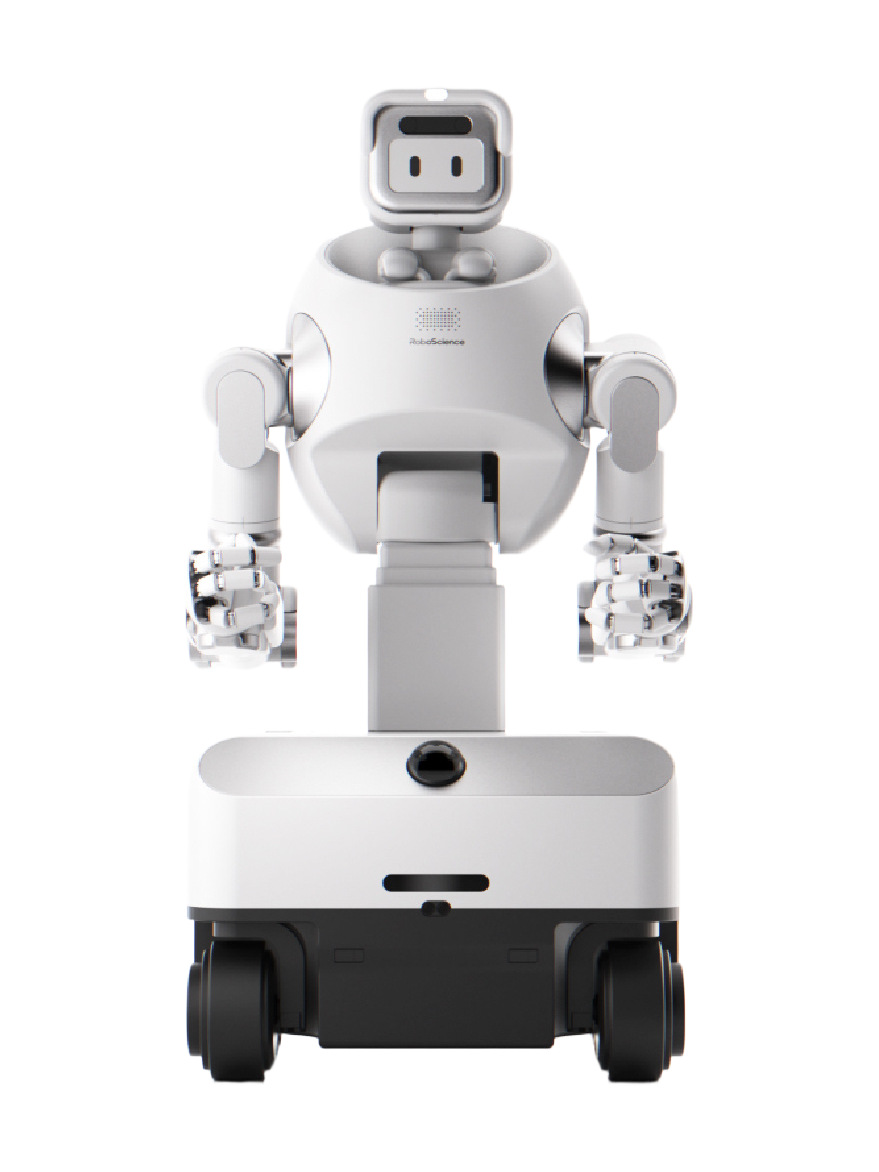
Manufacturer's own photo.
Specifications
8 of 32 stated 24 not stated
24 fields hidden
How to read the figuresShow guideClose
- not statedNo source
- noyesStated by a source
- 0Reported as zero
- ASource
- A*Source with a caveat (select it)
- CERecords only what the manufacturer states regarding CE marking.
Select a source marker for source details and notes.
Physical4/13 disclosed
Power2/5 disclosed
Sensing and autonomy2/6 disclosed
Payload and expansion0/3 disclosed
Commercial0/1 disclosed
Compliance & certifications0/4 disclosed
Against the field
Each strip holds every robot of this type in the guide that states the figure, one bar per group of values. Further right means a larger figure, not a better robot. A taller bar means more robots in that group.
Height
110–170cm43.3–66.9inOur conversion from 1100–1700 mm. The manufacturer does not state an imperial figure itself, so the conversion has no source of its own.
122 wheeled humanoids state a height
REX G1 states a range, not one figure, so it is shown as a band and not ranked against the others. 3 state only a bound (≥ or ≤) and are not ranked.
Degrees of freedom
22DoF
112 wheeled humanoids state degrees of freedom
65 state a higher figure, 28 a lower one. 12 more state exactly the same figure. 6 state only a bound (≥ or ≤) and are not ranked.
Runtime
at most 240minNote: load condition not stated
119 wheeled humanoids state a runtime
REX G1 states an upper limit, not one figure, so it is shown open-ended and not ranked against the others. 33 state only a bound (≥ or ≤) and are not ranked.
Notes
The producer's site is in Chinese only.
The footer of the producer's page gives the company name as Beijing Jike Weilai Technology Co., Ltd. (translated from the Chinese).
RoboScience launched REX G1 on 17 August; the producer's news item is dated 2026-09-02 (translated from the Chinese).
The producer says REX G1 is built for logistics, factory, retail and home settings (translated from the Chinese).
Intended use, per the manufacturer. “Built for logistics, factories, retail, and home environments, REX G1 can complete the full loop from task understanding to execution in unstructured, highly dynamic real-world settings”
Sources
One line per source, not per figure: a source has one retrieval date.
- Arobosci.com/rex-g1-launch/Main source. Retrieved
- Brobosci.com/en/rex-g1-en/Retrieved