CLOiD
LG Electronics CLOiD is a wheeled humanoid robot from South Korea, announced 2026.
Sources retrieved: (B) · (C) · (A)
- Applications
- Indicative price
- Not stated
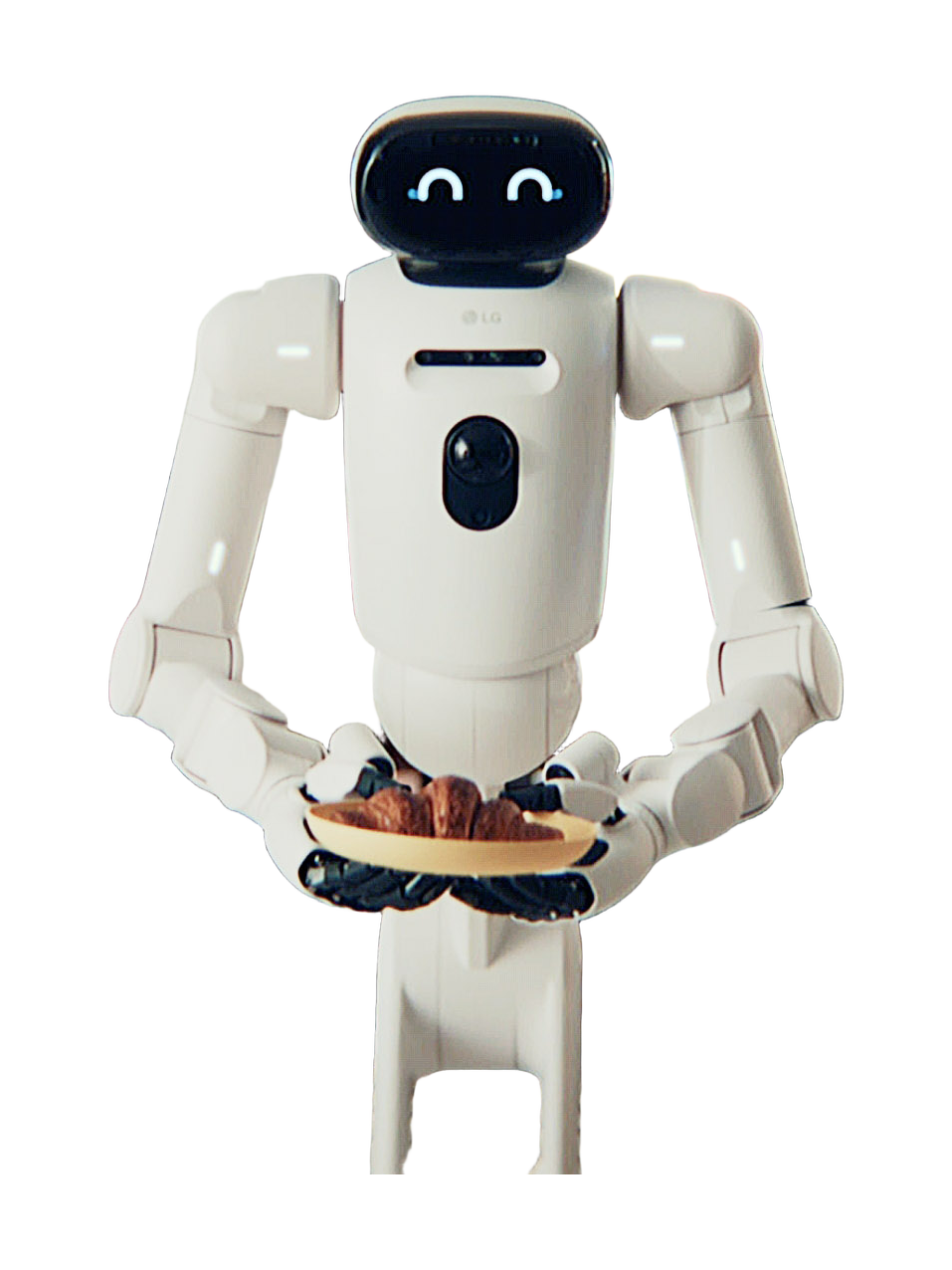
Manufacturer's own photo.
Specifications
3 of 32 stated 29 not stated
29 fields hidden
How to read the figuresShow guideClose
- not statedNo source
- noStated by a source
- 0Reported as zero
- ASource
- A*Source with a caveat (select it)
- CERecords only what the manufacturer states regarding CE marking.
Select a source marker for source details and notes.
Physical1/13 disclosed
Power0/5 disclosed
Sensing and autonomy2/6 disclosed
Payload and expansion0/3 disclosed
Commercial0/1 disclosed
Compliance & certifications0/4 disclosed
Against the field
Each strip holds every robot of this type in the guide that states the figure, one bar per group of values. Further right means a larger figure, not a better robot. A taller bar means more robots in that group.
Height
105–143cm41.3–56.3inOur conversion from 105–143 cm. The manufacturer does not state an imperial figure itself, so the conversion has no source of its own.
122 wheeled humanoids state a height
CLOiD states a range, not one figure, so it is shown as a band and not ranked against the others. 3 state only a bound (≥ or ≤) and are not ranked.
Notes
LG calls CLOiD an AI-enabled home robot, first demonstrated publicly at CES 2026.
CLOiD has a head unit, a torso with two articulated arms and a wheeled base with autonomous navigation, according to the producer.
The torso tilts to adjust the robot's height, so it can pick up objects from knee level and above.
Each hand has five independently actuated fingers.
The wheeled base uses autonomous driving technology derived from LG's robot vacuums and the LG Q9.
The head carries the robot's chipset, a display, a speaker, cameras, sensors and voice-based generative AI.
Intended use, per the manufacturer. “Designed to perform and coordinate household tasks across connected home appliances, CLOiD is intended to reduce the time and physical effort required for everyday chores.”
Sources
One line per source, not per figure: a source has one retrieval date.