X-HumanoidChina
Tiangong Omni
- In production
- 20–40 kg44–88 lb
- Industry
- Research and development
- Entertainment
VariantsFlagshipStandardBasic
The manufacturer sells this model in several variants. The figures on this page apply to the variant the source names.
Key figures as stated by the manufacturer
1 of 6 stated · 5 gaps- Weight A 39.5kg87.1lbOur conversion from 39.5 kg. The manufacturer does not state an imperial figure itself, so the conversion has no source of its own.
- Payload, walking not stated
- Runtime not stated
- Max speed not stated
- AI model not stated
- Indicative price not stated
How to read the figures
- 14kgA30.9lbA
- The letter in the grey square after a figure points to the source the figure came from. Robots with several sources carry several letters.
- Payload, walking
- A stroke before a field name means the figure carries a caveat that affects how it compares with other robots. The caveat is printed with the figure.
- 74.5lb
- Imperial figures are our own conversion unless the manufacturer states an imperial figure itself. The source letter always belongs to the metric figure — a conversion has no source of its own.
Deviations and variants in the key figures (1)
Weight
Note Given as a single combined "height/weight" line for the Flagship configuration.
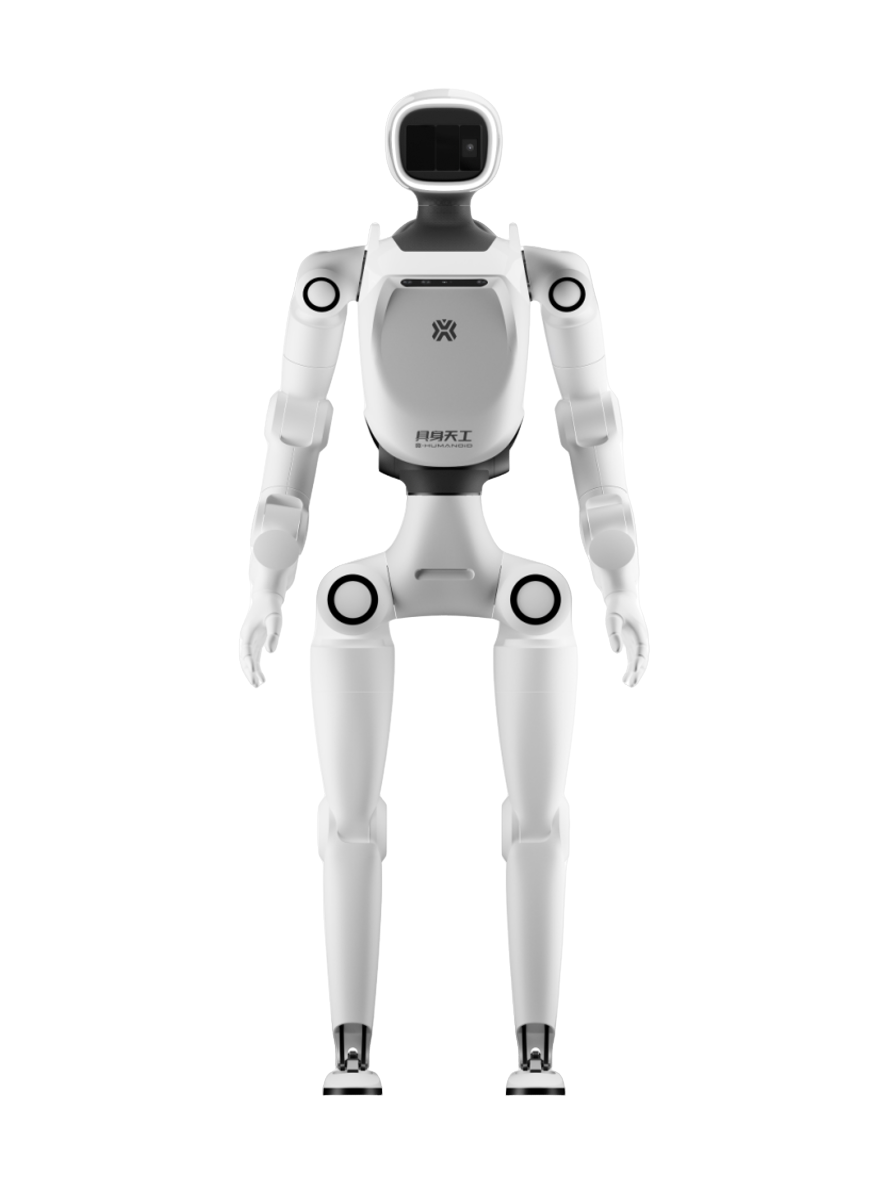
Manufacturer's own photo.
Intended use, per the manufacturer
The manufacturer’s words
Four use-case groups: research and education (secondary R&D, competition development and real-machine training for universities, research institutes and schools, including deployment, debugging, maintenance and after-sales training); guided tours and performances (interactive guidance, mobile guiding and basic performance for science museums, expos, museums and stores); home and elder care (companionship, elder care, nursing and housework, a long-term goal); and industrial settings (inspection, sorting and picking tasks in unstructured industrial spaces, a long-term goal).
Source: x-humanoid.com · Retrieved
This category is not our assessment.
Full specifications
10 of 33 fields stated| Field | Value | Source and caveats |
|---|---|---|
| Physical | ||
| Weight | 39.5kg87.1lbOur conversion from 39.5 kg. The manufacturer does not state an imperial figure itself, so the conversion has no source of its own. | Note Given as a single combined "height/weight" line for the Flagship configuration. A |
| Length | not stated | |
| Width | not stated | |
| Height | 135cm53.1inOur conversion from 135 cm. The manufacturer does not state an imperial figure itself, so the conversion has no source of its own. | Note Given as a single combined "height/weight" line for the Flagship configuration. A |
| Degrees of freedom | 31DoF | Note Per-part breakdown also given: legs 6, arms 7, waist 3, neck 2. A |
| Payload, walking | not stated | |
| Payload, standing | not stated | |
| Max speed | not stated | |
| Max slope | not stated | |
| Single obstacle | not stated | |
| Stair step, continuous | not stated | |
| IP rating | IP53 | Note Producer's own label is "whole-unit protection rating". A |
| Operating temperature, low | -10°C14°FOur conversion from -10 °C. The manufacturer does not state an imperial figure itself, so the conversion has no source of its own. | Note Producer's own wording is "adapts to a -10°C to 40°C working environment". A |
| Operating temperature, high | 40°C104°FOur conversion from 40 °C. The manufacturer does not state an imperial figure itself, so the conversion has no source of its own. | Note Producer's own wording is "adapts to a -10°C to 40°C working environment". A |
| Power | ||
| Battery | not stated | |
| Runtime | not stated | |
| Hot-swap battery | not stated | |
| Charge time | not stated | |
| Docking station | not stated | |
| Sensing and autonomy | ||
| LiDAR | 1x LiDAR. | Note Listed together with a depth camera and a high-precision IMU under a single sensor line; no lidar model or range figure is given. A |
| Cameras | 1x depth camera. | Note Listed together with 1 lidar and a high-precision IMU under a single sensor line. A |
| Onboard compute | 2070 TFLOPS AI compute domain controller. | Note Stated to support end-to-end VLA (vision-language-action) model deployment. A |
| ROS 2 | not stated | |
| SDK languages | not stated | Caveat A three-layer open interface (joints/sensors, system, and motion-control API) and a developer platform ("HuiSi KaiWu") are stated, but no specific SDK programming language is named. A |
| Autonomy level | not stated | |
| Payload and expansion | ||
| Mounting interface | Optional dexterous hands, VR/motion-capture data-collection devices, and an "isomorphic" teleoperation arm accessory. | Note Stated as expansion options for the Flagship configuration only. A |
| Power out | not stated | |
| Data ports | not stated | |
| Commercial | ||
| Indicative price | not stated | |
| EU | ||
| CE stated | not stated | Records only what the manufacturer states regarding CE marking. |
| FCC stated | not stated | |
| UL stated | not stated | |
| CCC stated | not stated | |
Notes
- The producer's own comparison table lists Flagship, Standard and Basic configurations. The compute (2070 TFLOPS), degrees-of-freedom (31) and expansion options are for the Flagship configuration.
- X-Humanoid's own product page names TianGong Omni a "small-body, super-intelligent" open humanoid platform, described as "the world's first open platform for Humanoid-Native embodied-intelligence tasks".
- The page also states a home and elder-care use case as a longer-term goal - companionship, elder care, nursing and housework.
- The page also states an operating lifespan of at least 15,000 hours and self-recovery after a fall or drop.
- Manufacturer's own registered name: Beijing Humanoid Robot Innovation Center Co., Ltd., trading as X-Humanoid.
The manufacturer’s own page
The manufacturer’s original product page for this model.
Open the manufacturer’s page for Tiangong Omnihttps://www.x-humanoid.com/detail/omni.html
Sources
-
A
Manufacturer product page. www.
x-humanoid. · Retrievedcom/ detail/ omni. html
One line per source, not per figure: a source has one retrieval date. The letter beside a figure points to the line it came from.