Key figures as stated by the manufacturer
0 of 6 stated · 6 gapsThe manufacturer states none of the 6 key figures.
How to read the figures
- 1,100mmB43.3inB
- A dashed letter marks a secondary source – a datasheet, manual or developer documentation from the manufacturer, or a press report used only where the manufacturer gives no figure.
- Payload, moving
- A stroke before a field name means the figure carries a caveat that affects how it compares with other robots. The caveat is printed with the figure.
- 74.5lb
- Imperial figures are our own conversion unless the manufacturer states an imperial figure itself. The source letter always belongs to the metric figure — a conversion has no source of its own.
Deviations and variants in the key figures (1)
Weight
Caveat The table gives 26 kg for the main unit and 48 kg for the lifting platform and chassis.
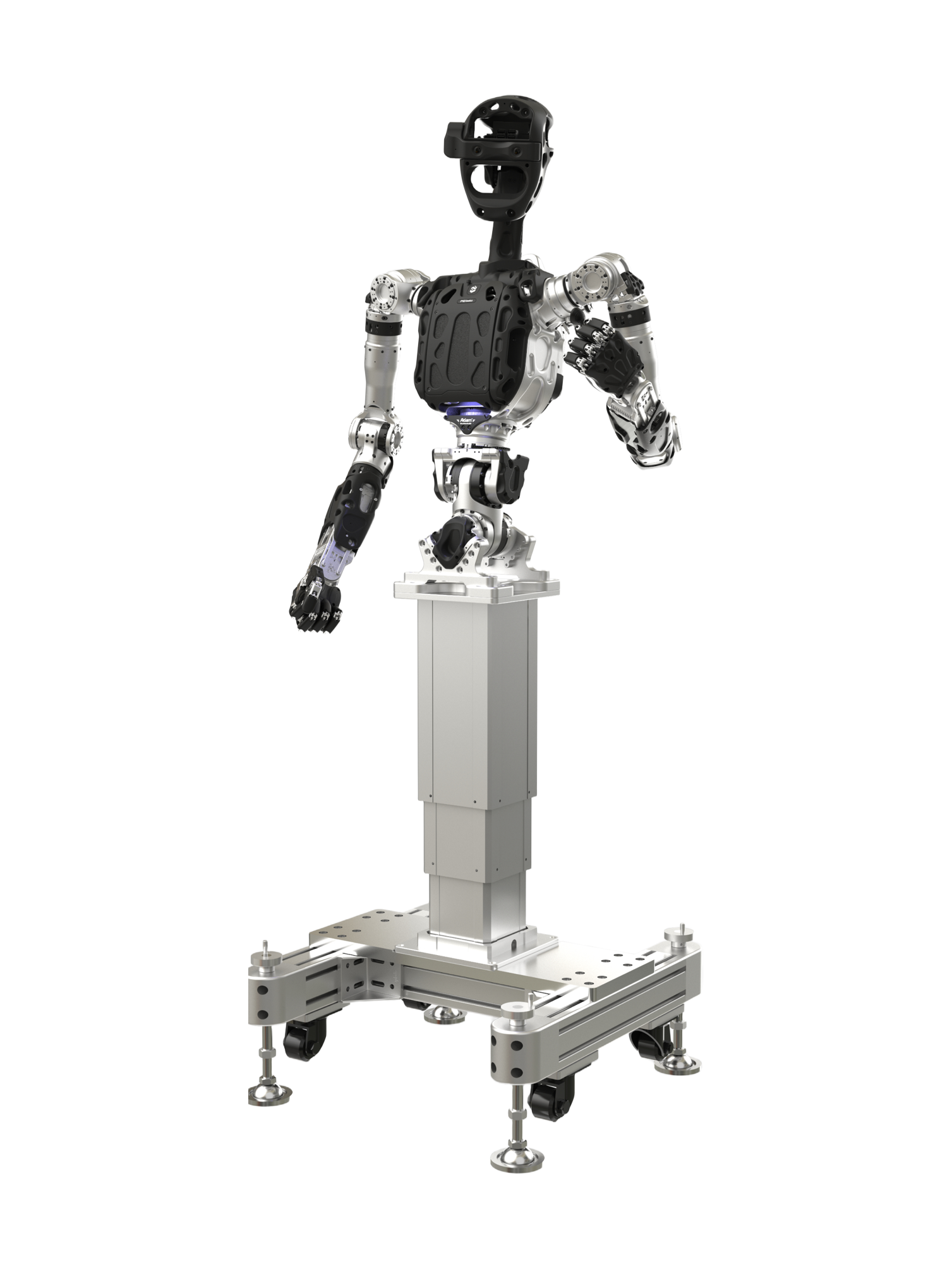
Manufacturer's own photo.
Intended use, per the manufacturer
The manufacturer’s words
It is widely applicable across various cutting-edge fields including scientific research experiments, industrial automation testing, medical assistance , and service robotics.
Source: wiki.pndbotics.com · Retrieved
This category is not our assessment.
Full specifications
7 of 32 fields stated| Field | Value | Source and caveats |
|---|---|---|
| Physical | ||
| Weight | not stated | Caveat The table gives 26 kg for the main unit and 48 kg for the lifting platform and chassis. A |
| Length | not stated | |
| Width | not stated | |
| Height | 135–177cm53.1–69.7inOur conversion from 135–177 cm. The manufacturer does not state an imperial figure itself, so the conversion has no source of its own. | Note Adjustable height range. A |
| Degrees of freedom | 31DoF | Note Total. The table lists 13 per arm including a six-joint dexterous hand, 3 for the waist and 2 for the head. A |
| Payload, moving | not stated | |
| Payload, standing | not stated | |
| Max speed | not stated | |
| Max slope | not stated | |
| Single obstacle | not stated | |
| IP rating | not stated | |
| Operating temperature, low | not stated | |
| Operating temperature, high | not stated | |
| Power | ||
| Battery | 1,172Wh | Note Battery row of the table, which also gives a maximum voltage of 46.2 V and a maximum output current of 25 A. A |
| Runtime | not stated | |
| Hot-swap battery | not stated | |
| Charge time | not stated | |
| Docking station | not stated | |
| Sensing and autonomy | ||
| LiDAR | not stated | |
| Cameras | ZED Mini depth camera. | Note Perception sensor row of the table; the text calls it a depth vision sensor. A |
| Onboard compute | NVIDIA Jetson Orin NX 16GB for perception and AI; Intel NUC12WSKi7 for motion control. | Note Computer rows of the specification table. A |
| ROS 2 | yes | Note The wiki says Adam-U is fully compatible with ROS2 Humble. A |
| SDK languages | not stated | |
| Autonomy level | not stated | |
| Payload and expansion | ||
| Mounting interface | not stated | |
| Power out | not stated | |
| Data ports | Ethernet | Note Communication row of the table: Wi-Fi 6, Bluetooth 5.0 and wired Ethernet. A |
| Commercial | ||
| Indicative price | not stated | |
| EU | ||
| CE stated | not stated | Records only what the manufacturer states regarding CE marking. |
| FCC stated | not stated | |
| UL stated | not stated | |
| CCC stated | not stated | |
Notes
- The producer's wiki describes Adam-U as an upper-body robot designed for desktop-level operations and experiments.
- The producer's parts drawing shows a head, a torso and two arms on a lift column over a chassis with casters.
- The wiki recommends placing a 40 kg counterweight in the chassis to keep the robot balanced.
The manufacturer’s own page
The manufacturer’s original product page for this model.
Open the manufacturer’s page for Adam-Uhttps://wiki.pndbotics.com/en/half_robot/half_robot/
Sources
-
A
Secondary: wiki.
pndbotics. · Retrievedcom/ en/ half_ robot/ half_ robot/
One line per source, not per figure: a source has one retrieval date. The letter beside a figure points to the line it came from.