Key figures as stated by the manufacturer
0 of 6 stated · 6 gapsThe manufacturer states none of the 6 key figures.
How to read the figures
- 14kgA30.9lbA
- The letter in the grey square after a figure points to the source the figure came from. Robots with several sources carry several letters.
- Payload, moving
- A stroke before a field name means the figure carries a caveat that affects how it compares with other robots. The caveat is printed with the figure.
- 74.5lb
- Imperial figures are our own conversion unless the manufacturer states an imperial figure itself. The source letter always belongs to the metric figure — a conversion has no source of its own.
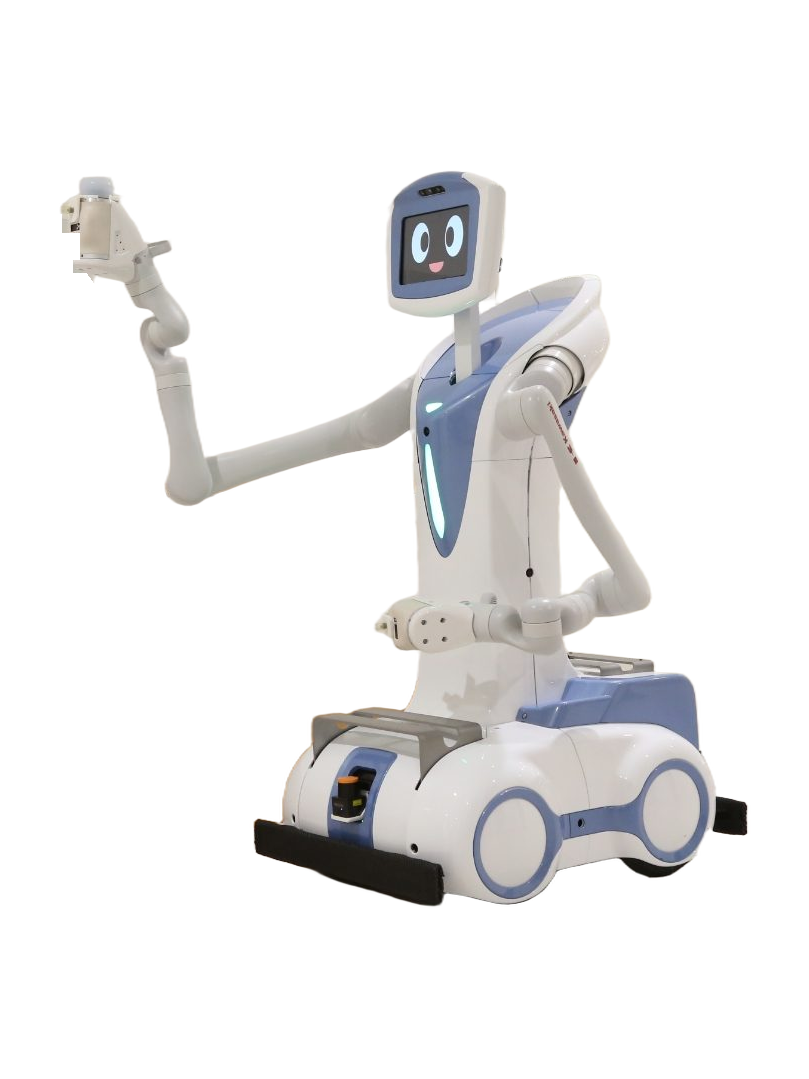
Manufacturer's own photo.
Intended use, per the manufacturer
Source: kawasakirobotics.com · Retrieved
The producer names restaurant service, and patrolling and cleaning support in buildings.
This category is not our assessment.
Full specifications
1 of 32 fields stated| Field | Value | Source and caveats |
|---|---|---|
| Physical | ||
| Weight | not stated | |
| Length | not stated | |
| Width | not stated | |
| Height | not stated | |
| Degrees of freedom | not stated | |
| Payload, moving | not stated | |
| Payload, standing | not stated | |
| Max speed | not stated | |
| Max slope | not stated | |
| Single obstacle | not stated | |
| IP rating | not stated | |
| Operating temperature, low | not stated | |
| Operating temperature, high | not stated | |
| Power | ||
| Battery | not stated | |
| Runtime | not stated | |
| Hot-swap battery | not stated | |
| Charge time | not stated | |
| Docking station | not stated | |
| Sensing and autonomy | ||
| LiDAR | Lidar, used to map the surroundings and locate the robot. | Note The page also names vision sensors used for object recognition and collision avoidance. A |
| Cameras | not stated | |
| Onboard compute | not stated | |
| ROS 2 | not stated | |
| SDK languages | not stated | |
| Autonomy level | not stated | Caveat The producer calls Nyokkey an autonomous mobile robot (AMR) that chooses its own route to a set destination, with a switch to remote operation for tasks that are hard to automate; no level of autonomy is named. A |
| Payload and expansion | ||
| Mounting interface | not stated | |
| Power out | not stated | |
| Data ports | not stated | |
| Commercial | ||
| Indicative price | not stated | |
| EU | ||
| CE stated | not stated | Records only what the manufacturer states regarding CE marking. |
| FCC stated | not stated | |
| UL stated | not stated | |
| CCC stated | not stated | |
Notes
- Kawasaki calls Nyokkey an autonomous mobile type service robot that works with two arms.
- The producer's photo shows a screen face on a neck, a torso with two arms and a four-wheeled base.
- Kawasaki began developing Nyokkey in spring 2021 as a patrol robot watching over patients in a hospital.
- Kawasaki has since developed Nyokkey further for a wide range of uses in the service industry.
- The producer describes Nyokkey as a platform: Kawasaki builds the hardware and develops the software for each use with partners.
- The page names uses such as serving meals and clearing dishes in a restaurant, and patrolling and supporting cleaning work in buildings.
- A remote collaboration system, Successor, lets an operator take over by remote control when a task is hard to automate or an error occurs, according to the producer.
The manufacturer’s own page
The manufacturer’s original product page for this model.
Open the manufacturer’s page for Nyokkeyhttps://kawasakirobotics.com/in/?p=4867
Sources
-
A
Manufacturer product page. kawasakirobotics.
com/ · Retrievedin/ ? p= 4867
One line per source, not per figure: a source has one retrieval date. The letter beside a figure points to the line it came from.