Key figures as stated by the manufacturer
3 of 6 stated · 3 gaps- Weight A 71kg157lbOur conversion from 71 kg. The manufacturer does not state an imperial figure itself, so the conversion has no source of its own.
- Payload, walking not stated
- Runtime A 180minWarning: load condition not stated
- Max speed A 5.5km/h3.42mphOur conversion from 5.5 km/h. The manufacturer does not state an imperial figure itself, so the conversion has no source of its own.
- AI model not stated
- Indicative price not stated
How to read the figures
- 1,100mmB43.3inB
- A dashed letter marks a secondary source – a datasheet, manual or developer documentation from the manufacturer, or a press report used only where the manufacturer gives no figure.
- Payload, walking
- A stroke before a field name means the figure carries a caveat that affects how it compares with other robots. The caveat is printed with the figure.
- 74.5lb
- Imperial figures are our own conversion unless the manufacturer states an imperial figure itself. The source letter always belongs to the metric figure — a conversion has no source of its own.
Deviations and variants in the key figures (3)
Weight
Note The brochure lists the same weight for GR-3 and GR-3C.
Runtime
Caveat The brochure gives an average runtime and no load or task condition.
Max speed
Note The brochure labels this figure "Walking Speed", not a maximum.
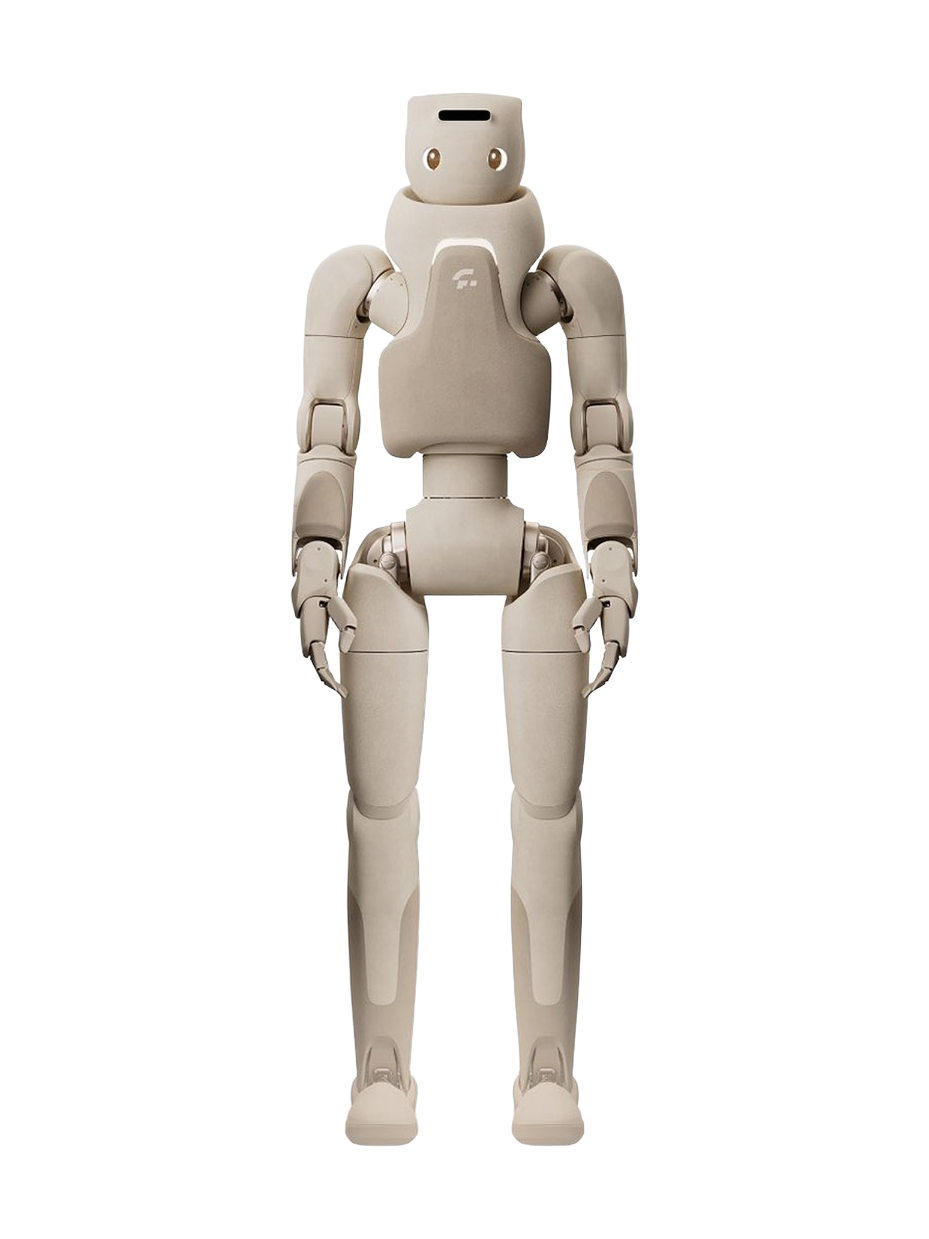
Product image from a reseller's page (robotsinternational.com), not the manufacturer's own site.
Intended use, per the manufacturer
The manufacturer’s words
GR-3 is designed to engage with people in public settings. It can act as a service assistant, a comforting presence for children, or a responsive companion for the seniors.
Source: fftai.com · Retrieved
This category is not our assessment.
Full specifications
10 of 33 fields stated| Field | Value | Source and caveats |
|---|---|---|
| Physical | ||
| Weight | 71kg157lbOur conversion from 71 kg. The manufacturer does not state an imperial figure itself, so the conversion has no source of its own. | Note The brochure lists the same weight for GR-3 and GR-3C. A |
| Length | not stated | Note The table gives one combined entry for height, length and width, without saying which of 552 mm and 292 mm is the body depth or the shoulder width. A |
| Width | not stated | Note The table gives one combined entry for height, length and width, without saying which of 552 mm and 292 mm is the body depth or the shoulder width. A |
| Height | 165cm65inOur conversion from 165 cm. The manufacturer does not state an imperial figure itself, so the conversion has no source of its own. | Note The headline figure. The specification table gives the first of its combined dimensions as 1642 mm, which is 164.2 cm. A |
| Degrees of freedom | at most 55DoF | Note Stated as "up to"; the table ties the maximum to the 12-DoF dexterous hand version. Split: head 2, waist 3, each arm 7, each leg 6, basic hand 6 (12 optional). A |
| Payload, walking | not stated | |
| Payload, standing | not stated | |
| Max speed | 5.5km/h3.42mphOur conversion from 5.5 km/h. The manufacturer does not state an imperial figure itself, so the conversion has no source of its own. | Note The brochure labels this figure "Walking Speed", not a maximum. A |
| Max slope | not stated | |
| Single obstacle | not stated | |
| Stair step, continuous | not stated | |
| IP rating | not stated | |
| Operating temperature, low | not stated | |
| Operating temperature, high | not stated | |
| Power | ||
| Battery | not stated | Caveat The brochure lists two batteries, 702Wh and 234Wh, and gives no combined capacity. A |
| Runtime | 180minWarning: load condition not stated | Caveat The brochure gives an average runtime and no load or task condition. A |
| Hot-swap battery | yes | Note Stated in the body text and in the battery rows of the specification table. A |
| Charge time | 90min | Note From the battery rows of the specification table. A |
| Docking station | not stated | |
| Sensing and autonomy | ||
| LiDAR | not stated | Caveat The brochure introduces the lidar module as the addition that distinguishes GR-3C from the standard model, and lists it only under GR-3C options; it does not state whether the standard GR-3 has one. A |
| Cameras | Stereo vision plus AI depth camera. | Note From the headline figures for GR-3. A |
| Onboard compute | 8-core high-performance CPU (AMD Ryzen); a Jetson AGX Orin or Thor module is an optional extension. | Note Standard computing power and the optional extension, from the general technical specifications. A |
| ROS 2 | not stated | |
| SDK languages | not stated | |
| Autonomy level | not stated | |
| Payload and expansion | ||
| Mounting interface | not stated | |
| Power out | not stated | |
| Data ports | Type-C USB 3.0 RJ45 | Note From the central processing unit rows of the specification table. A |
| Commercial | ||
| Indicative price | not stated | |
| EU | ||
| CE stated | not stated | Records only what the manufacturer states regarding CE marking. |
| FCC stated | not stated | |
| UL stated | not stated | |
| CCC stated | not stated | |
Notes
- The producer's GR-3 series has two models with the same headline figures: GR-3 (nickname "Meow-bot"), built for interaction, and GR-3C ("Cosmo"), which adds a lidar module and a reinforced shell. The brochure lists the lidar and camera options under GR-3C.
- The brochure lists a single-arm load capacity of 3 kg. That is an arm-specific figure, not a figure for what the whole robot can carry.
- The brochure gives a 31-sensor tactile system (16 in the head, 15 in the torso) and a four-microphone array. It names no price; sales enquiries go through the producer's sales team.
- Fourier's CES press release of 7 January 2026 says GR-3 was first introduced in August 2025.
The manufacturer’s own page
The manufacturer’s original product page for this model.
Open the manufacturer’s page for GR-3https://www.fftai.com/pdf/en/gr3.pdf
Sources
-
A
Secondary: www.
fftai. · Retrievedcom/ pdf/ en/ gr3. pdf
One line per source, not per figure: a source has one retrieval date. The letter beside a figure points to the line it came from.