Key figures as stated by the manufacturer
0 of 6 stated · 6 gapsThe manufacturer states none of the 6 key figures.
How to read the figures
- 14kgA30.9lbA
- The letter in the grey square after a figure points to the source the figure came from. Robots with several sources carry several letters.
- 74.5lb
- Imperial figures are our own conversion unless the manufacturer states an imperial figure itself. The source letter always belongs to the metric figure — a conversion has no source of its own.
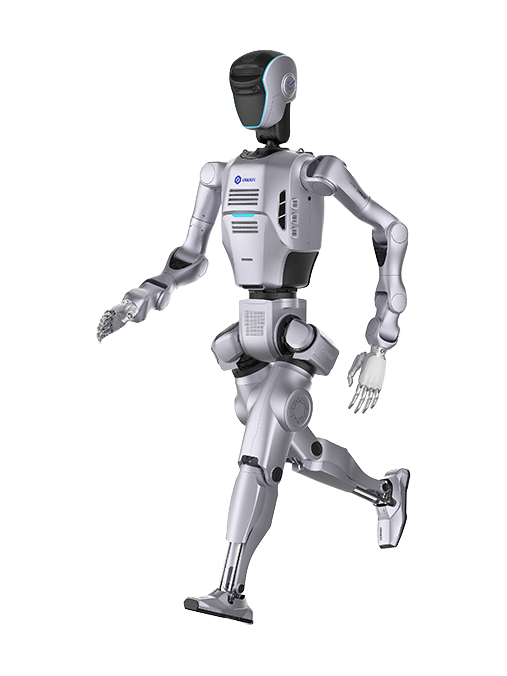
Manufacturer's own photo.
Intended use, per the manufacturer
The manufacturer’s words
DOBOT ATOM is built for repetitive industrial and commercial tasks like automotive assembly line material handling, beverage preparation in coffee shops, and pharmacy nighttime dispensing.
Source: dobot-robots.com · Retrieved
This category is not our assessment.
Full specifications
0 of 33 fields stated| Field | Value | Source and caveats |
|---|---|---|
| Physical | ||
| Weight | not stated | |
| Length | not stated | |
| Width | not stated | |
| Height | not stated | |
| Degrees of freedom | not stated | |
| Payload, walking | not stated | |
| Payload, standing | not stated | |
| Max speed | not stated | |
| Max slope | not stated | |
| Single obstacle | not stated | |
| Stair step, continuous | not stated | |
| IP rating | not stated | |
| Operating temperature, low | not stated | |
| Operating temperature, high | not stated | |
| Power | ||
| Battery | not stated | |
| Runtime | not stated | |
| Hot-swap battery | not stated | |
| Charge time | not stated | |
| Docking station | not stated | |
| Sensing and autonomy | ||
| LiDAR | not stated | |
| Cameras | not stated | |
| Onboard compute | not stated | |
| ROS 2 | not stated | |
| SDK languages | not stated | |
| Autonomy level | not stated | Note No named autonomy level is given; the notes describe ROM-1. A |
| Payload and expansion | ||
| Mounting interface | not stated | |
| Power out | not stated | |
| Data ports | not stated | |
| Commercial | ||
| Indicative price | not stated | |
| EU | ||
| CE stated | not stated | Records only what the manufacturer states regarding CE marking. |
| FCC stated | not stated | |
| UL stated | not stated | |
| CCC stated | not stated | |
Notes
- Dobot's own page describes ATOM's "Neuro-Driven Dexterity System (NDS)" as controlling "28 upper-body degrees of freedom (DoF)" through a Transformer-based architecture and binocular RGB vision; this is explicitly an upper-body figure, never given as a single whole-robot total.
- The "Anthropomorphic Walking System (AWS)" is stated to reduce energy consumption by 42% compared to traditional bent-knee walking and to adapt to workstation heights of 700-1000mm.
- Edge computing is described only as delivering "7.7x industry-standard computational power", with no absolute figure (TOPS) or chip name given.
- The same page also introduces three separate products: ATOM Max (41 DoF, 1500 TOPS AI module), ATOM - Trainer and ATOM D - Data Collection.
- No weight, height, whole-body payload, top speed, slope rating, obstacle/step height, IP rating, battery, runtime, ROS2/SDK support, or certifications are stated anywhere on the producer's own page for the base ATOM.
- No named autonomy level is given. The page describes a "Robot Operator Model-1" (ROM-1), combining base and vertical-industry models trained via imitation and reinforcement learning, with 100M parameters and 24Hz end-to-end control; not described as teleoperated.
- 21st Century Business Herald (sfccn.com) reported on 18 March 2025 that Dobot launched the Dobot Atom that day, with pre-sales from 199,000 yuan (translated from the Chinese).
- Dobot's news release of 27 June 2025 says the Atom entered mass production, with the first batch delivered at its launch conference in Nagoya, Japan.
The manufacturer’s own page
The manufacturer’s original product page for this model.
Open the manufacturer’s page for Atomhttps://www.dobot-robots.com/products/humanoid-robots/atom.html
Sources
-
A
Manufacturer product page. www.
dobot-robots. · Retrievedcom/ products/ humanoid-robots/ atom. html
One line per source, not per figure: a source has one retrieval date. The letter beside a figure points to the line it came from.