Key figures as stated by the manufacturer
1 of 6 stated · 5 gaps- Weight not stated
- Payload, walking not stated
- Runtime not stated
- Max speed not stated
- AI model BC Gemini Robotics 2 Gemini Robotics ER 2
- Indicative price not stated
How to read the figures
- 14kgA30.9lbA
- The letter in the grey square after a figure points to the source the figure came from. Robots with several sources carry several letters.
- 74.5lb
- Imperial figures are our own conversion unless the manufacturer states an imperial figure itself. The source letter always belongs to the metric figure — a conversion has no source of its own.
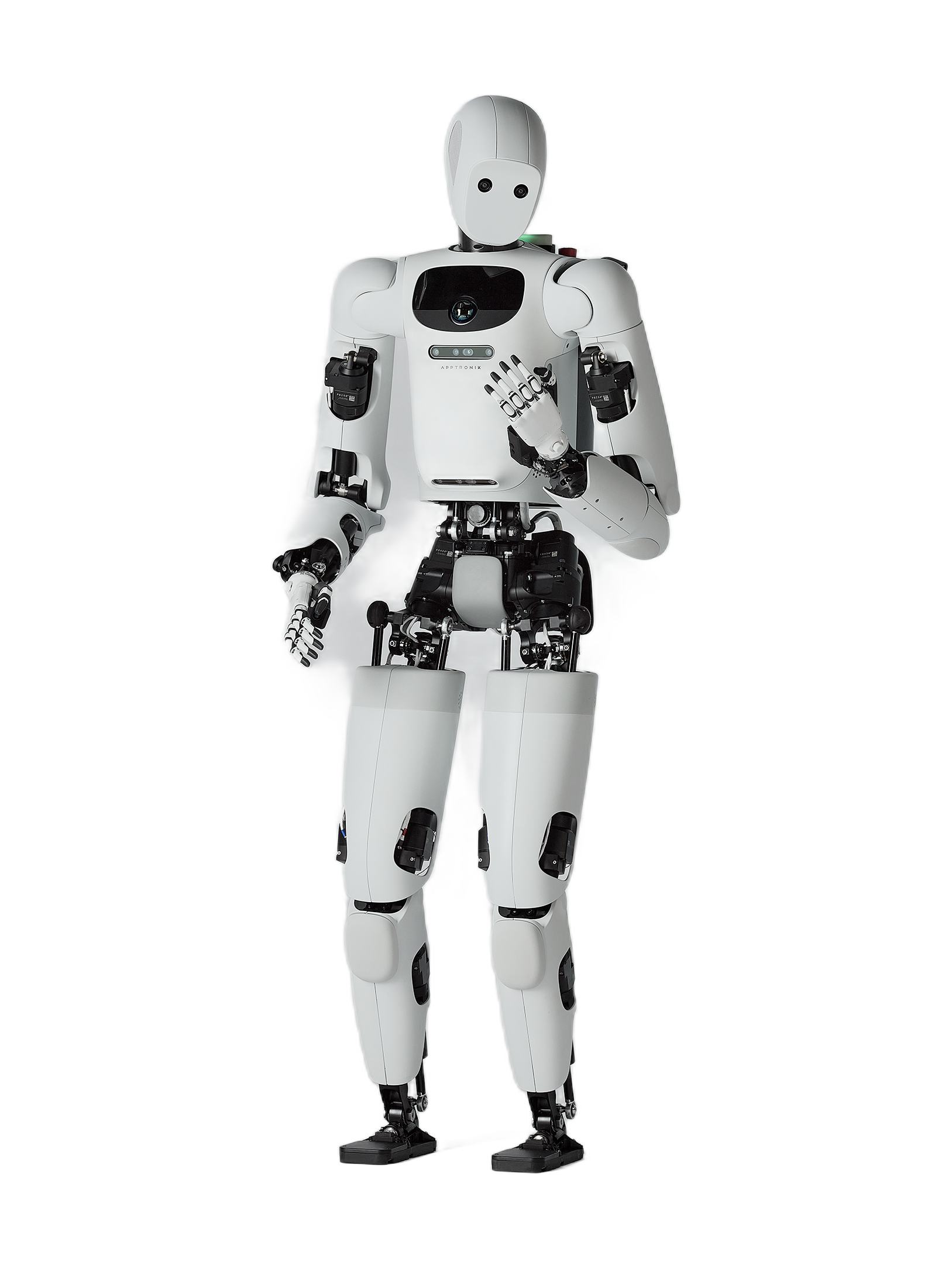
Manufacturer's own photo.
Intended use, per the manufacturer
The manufacturer’s words
Goods-to-Person Person-to-Goods Packout Kitting Inspection & Sorting Machine and Tool Tending
Source: apptronik.com · Retrieved
This category is not our assessment.
Full specifications
2 of 33 fields stated| Field | Value | Source and caveats |
|---|---|---|
| Physical | ||
| Weight | not stated | |
| Length | not stated | |
| Width | not stated | |
| Height | not stated | |
| Degrees of freedom | not stated | |
| Payload, walking | not stated | |
| Payload, standing | not stated | |
| Max speed | not stated | |
| Max slope | not stated | |
| Single obstacle | not stated | |
| Stair step, continuous | not stated | |
| IP rating | not stated | |
| Operating temperature, low | not stated | |
| Operating temperature, high | not stated | |
| Power | ||
| Battery | not stated | |
| Runtime | not stated | |
| Hot-swap battery | yes | Note Battery packs are swappable, supporting continuous ("7x22") operation. No runtime-per-pack figure given for Apollo 2 (unlike the original Apollo, whose ~4h figure is not carried over without confirmation). A |
| Charge time | not stated | |
| Docking station | not stated | |
| Sensing and autonomy | ||
| LiDAR | not stated | |
| Cameras | not stated | |
| Onboard compute | not stated | |
| ROS 2 | not stated | |
| SDK languages | not stated | |
| Autonomy level | General-purpose humanoid platform coordinated by Apptronik's "Artemis" software stack (perception, planning, controls, safety, task execution); co-developed with Google DeepMind on Gemini Robotics foundation models. | Note No formal autonomy-level classification published; this text describes the software stack's role, not a graded autonomy level. A |
| Payload and expansion | ||
| Mounting interface | not stated | |
| Power out | not stated | |
| Data ports | not stated | |
| Commercial | ||
| Indicative price | not stated | |
| EU | ||
| CE stated | not stated | Records only what the manufacturer states regarding CE marking. |
| FCC stated | not stated | |
| UL stated | not stated | |
| CCC stated | not stated | |
Notes
- Covers the bipedal, legged Apollo 2. Apollo 2 also ships with a wheeled base as an alternative mobility option on the same platform.
- Apollo 2's own product page (apptronik.com/apollo/apollo-2, checked 24 Sep 2026) carries no numeric specifications at all — height, weight, payload, DoF, speed, battery capacity and runtime are all absent from the page text (verified against the raw HTML, not just a rendered summary). Trade press (Humanoids Daily, "Substance Over Hype: Apptronik Quietly Unveils Apollo 2 Humanoid via Website Update") corroborates that Apptronik launched Apollo 2 without publishing a spec sheet.
The manufacturer’s own page
The manufacturer’s original product page for this model.
Open the manufacturer’s page for Apollo 2https://apptronik.com/apollo/apollo-2
Sources
-
A
Manufacturer product page. apptronik.
com/ · Retrievedapollo/ apollo-2 -
B
deepmind.
google/ · Retrievedblog/ gemini-robotics-2-brings-whole-body-intelligence-to-robots/ -
C
blog.
google/ · Retrievedinnovation-and-ai/ models-and-research/ google-deepmind/ gemini-robotics-er-2/
One line per source, not per figure: a source has one retrieval date. The letter beside a figure points to the line it came from.