Key figures as stated by the manufacturer
1 of 6 stated · 5 gaps- Weight A 70kg154lbOur conversion from 70 kg. The manufacturer does not state an imperial figure itself, so the conversion has no source of its own.
- Payload, walking not stated
- Runtime not stated
- Max speed not stated
- AI model not stated
- Indicative price not stated
How to read the figures
- 14kgA30.9lbA
- The letter in the grey square after a figure points to the source the figure came from. Robots with several sources carry several letters.
- 74.5lb
- Imperial figures are our own conversion unless the manufacturer states an imperial figure itself. The source letter always belongs to the metric figure — a conversion has no source of its own.
Deviations and variants in the key figures (1)
Weight
Note Producer's own label is "Body weight".
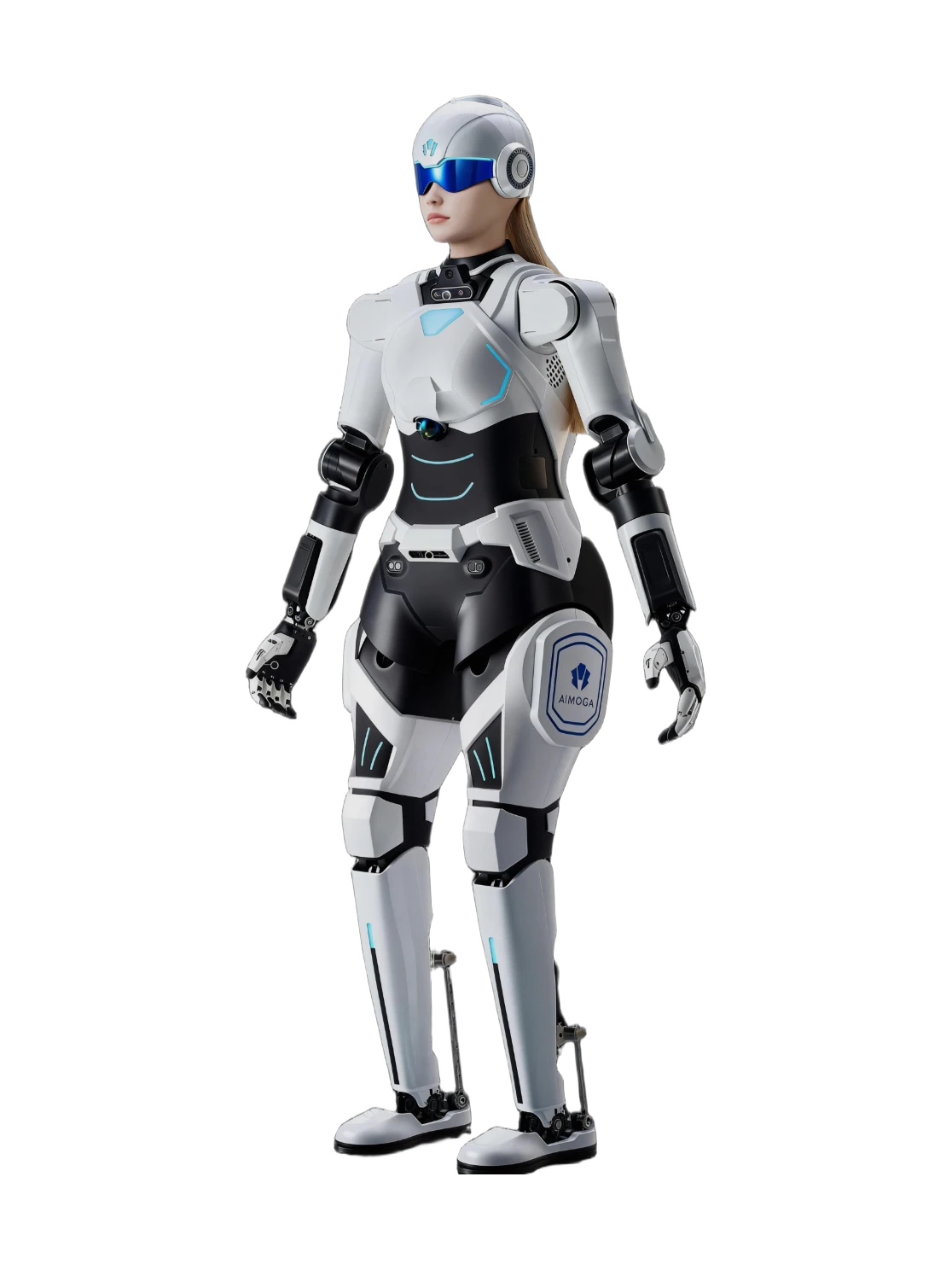
Manufacturer's own photo.
Intended use, per the manufacturer
Source: aimoga-robot.com · Retrieved
The page describes voice interaction, perception and its "MoNet" model in detail, but does not name a specific deployment setting or industry (dealership, retail, etc.) for Mornine.
This category is not our assessment.
Full specifications
5 of 33 fields stated| Field | Value | Source and caveats |
|---|---|---|
| Physical | ||
| Weight | 70kg154lbOur conversion from 70 kg. The manufacturer does not state an imperial figure itself, so the conversion has no source of its own. | Note Producer's own label is "Body weight". A |
| Length | not stated | |
| Width | not stated | |
| Height | 167cm65.7inOur conversion from 167 cm. The manufacturer does not state an imperial figure itself, so the conversion has no source of its own. | Note Producer's own label is "Height". A |
| Degrees of freedom | 40DoF | Note Stated only as a single full-body total; no breakdown by body part is given. A |
| Payload, walking | not stated | |
| Payload, standing | not stated | |
| Max speed | not stated | |
| Max slope | not stated | |
| Single obstacle | not stated | |
| Stair step, continuous | not stated | |
| IP rating | not stated | |
| Operating temperature, low | not stated | |
| Operating temperature, high | not stated | |
| Power | ||
| Battery | not stated | |
| Runtime | not stated | |
| Hot-swap battery | not stated | |
| Charge time | not stated | |
| Docking station | not stated | |
| Sensing and autonomy | ||
| LiDAR | 3D LiDAR, for 3D environmental perception and autonomous path planning. | Note From the page's perception-features list. A |
| Cameras | RGBD depth camera plus a wide-angle camera, for perceiving faces and environmental objects. | Note From the page's perception-features list. A |
| Onboard compute | not stated | |
| ROS 2 | not stated | |
| SDK languages | not stated | |
| Autonomy level | not stated | |
| Payload and expansion | ||
| Mounting interface | not stated | |
| Power out | not stated | |
| Data ports | not stated | |
| Commercial | ||
| Indicative price | not stated | |
| EU | ||
| CE stated | not stated | Records only what the manufacturer states regarding CE marking. |
| FCC stated | not stated | |
| UL stated | not stated | |
| CCC stated | not stated | |
Notes
- AiMOGA's own site (Moga Technology Co., Ltd, per the page footer) names the robot only "Mornine", with no model-number suffix such as "M1".
- The 40-degree-of-freedom figure is given only as a single full-body total; the page provides no breakdown by body part (arms/legs/head/hands).
- AiMOGA describes an on-device "MoNet" large language model (6-billion-parameter, mixture-of-experts, "terminal-side deployment", claimed 5ms/token inference); this is a software/AI-model description, not a hardware compute platform, so no onboard-compute chip is named.
The manufacturer’s own page
The manufacturer’s original product page for this model.
Open the manufacturer’s page for Morninehttps://www.aimoga-robot.com/mornine/
Sources
-
A
Manufacturer product page. www.
aimoga-robot. · Retrievedcom/ mornine/
One line per source, not per figure: a source has one retrieval date. The letter beside a figure points to the line it came from.